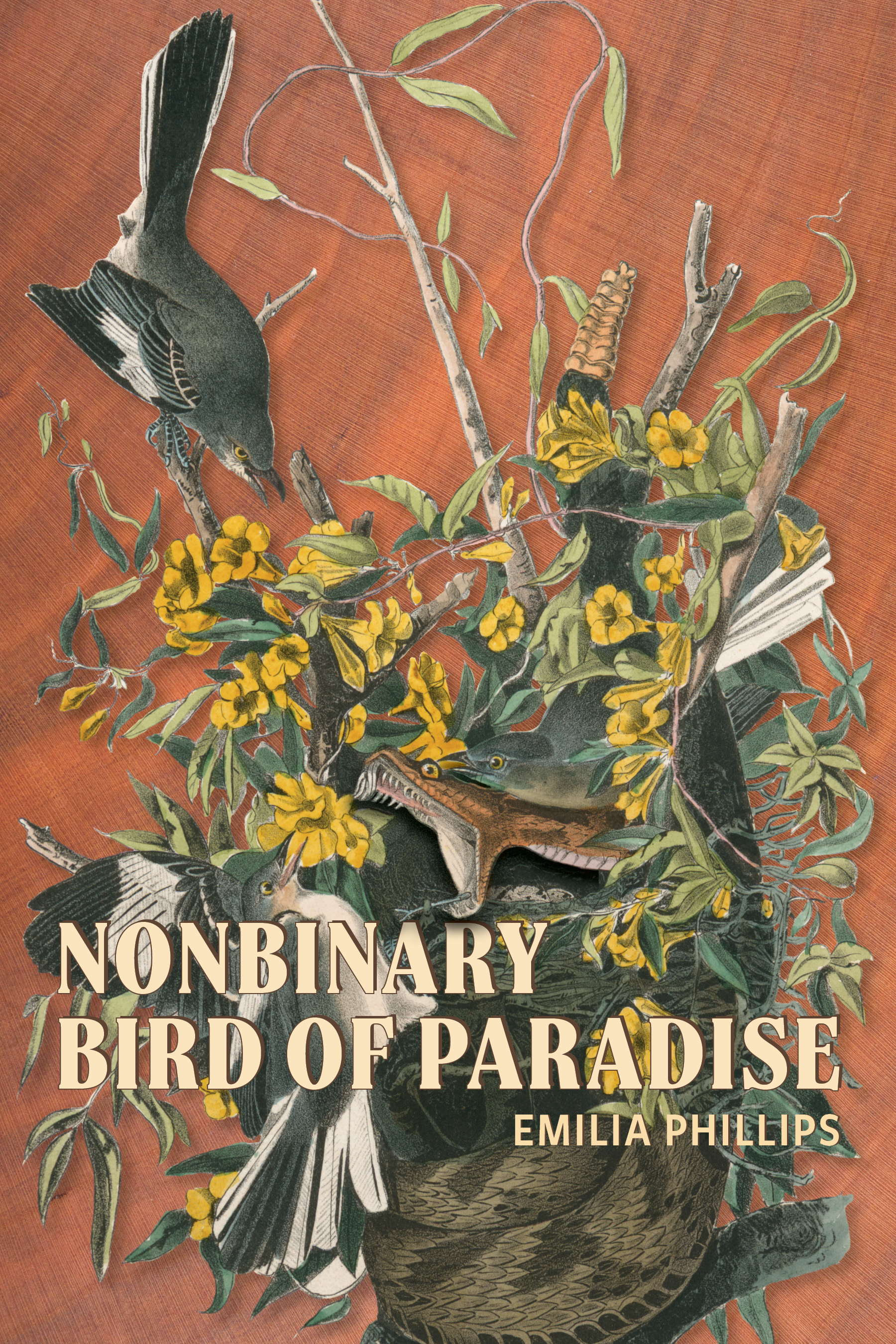
In “Step 1,” I’m asking students to develop their skills in the imperative and descriptive moods so that a character and/or narrator can demonstrate or walk through an concept or action. They will base their preliminary discussion on “The Unforgivable Curses” chapter of Harry Potter and the Goblet of Fire, the semester’s icebreaker text, as well as read the opening pages of Lorrie Moore’s “How To Be an Other Woman.” In doing so, they will likewise refer to some of the terminology we’ve gone over in previous classes—diction, syntax, dialogue, concrete details, point of view—and demonstrate their understanding of that terminology by relying on those literary concepts to make an effective piece.
Guess Who Reading Discussion Prompt for Craft of Prose
In this reading discussion prompt, students are asked to consider what elements contribute to our understanding of character in this “Guess Who” game in which students draw a character who appears in chapters 3–12 of Harry Potter and the Goblet of Fire and then describe them by answering a series of questions. They will use their descriptions to come up with three clues about the character: one is a concrete detail about the character’s appearance, the second is to identify a scene in which they appear, and the third is a literary craft element that helps reveal their character.
“All in Good Sport”: A Writing Exercise for Craft of Prose
In this exercise, I ask my Craft of Prose students to think about the ways in which one element of their worlds—sports—can reveal a great deal about cultural values in addition to demonstrating some of what’s possible. With the class having just read about the Quidditch World Cup in Harry Potter and the Goblet of Fire and been introduced briefly to other examples of games popular fiction, they will create their own sport, have a partner demonstrate, in a charades-like fashion, how that sport works, so that the writer m then ask themselves if they effectively described the sport in “All in Good Sport.”
Writing Exercise: “Dursleyish: Writing Unlikeable Characters” for Craft of Prose
As an icebreaker for my worldbuilding-themed Craft of Prose class, a Harry Potter text provides the inspiration for this exercise in creating unlikeable characters. Students start this “Dursleyish” writing exercise by drawing their character and then freewriting about that character’s day-to-day routine.
“How to Become a Writer” Exercise
For the second day of class in ENG 2031: Craft of Prose, students will begin the day by reading an excerpt from Lorrie Moore’s piece “How to Become a Writer” and then write directions for themselves about becoming a writer in this “How to Become a Writer” Exercise on Google Drive.
Introductions and the Alias of Imagination for First Day of Craft of Prose
Note: In an effort to keep this blog updated regularly, I’m going to be storing my writing exercises and handouts in my Google Drive. I will post these exercises as a link here.
This single document includes two components:
- An introduction questionnaire, allowing students to tell me a little about them, their needs, and their preferences.
- A Writing Exercise in which students introduce themselves by creating a fake or exaggerated writer’s bio or acknowledgments page, titled “Alias of Imagination.”
Students will read two of Michael Martone’s flash CNF pieces titled “Contributor’s Notes” and “Acknowledgments” by Paul Theroux. This should be a fun way for students to tell one another about themselves while exercising their skills on the page.
“The Craft of Prose” Fall 2015: Course Description, Required Texts, and Grade Requirements
Instructor’s Course Description
As a means of exploring the craft of prose writing, we will read, analyze, and imitate two living writers: Chimamanda Ngozi Adichie and Jesmyn Ward. By reading two, book-length works by each writer—a short story collection and book-length essay by Adichie and a novel and memoir by Ward—we will see how these writers develop their unique styles across genres and locate how their personal concerns inform their fictional narratives. Additionally, we will supplement these texts with short stories and essays by some of the most influential prose writers of the 20th century to understand the history and development of American prose over the last one hundred years. We will translate these immersive reading experiences into writing skills through discussion, exercises, and workshop. Several times throughout the semester, students will turn in original writing for workshop, a collaborative discussion about writing techniques and their effects on readers, and later revise two of the pieces using the comments received in workshop. You should bring to this class a hard work ethic supported by curiosity and generosity. We will base our discussions on how texts work rather than what they mean, after Francine Prose’s ideal of “reading like a writer.” My approach to teaching writing is founded on the belief that our writing skills must be practiced and cultivated, and that one must continually challenge one’s aesthetics, habits, and concerns throughout one’s writing life in order to write anything of consequence to one’s readers and, perhaps more importantly, one’s self.
Required Texts
- The Thing Around Your Neck by Chimamanda Ngozi Adichie. Anchor, 2010. ISBN: 978-0307455918
- We Should All Be Feminists by Chimamanda Ngozi Adichie. Anchor, 2015. ISBN: 978-1101911761.
- The Best American Essays of the Century, ed. Joyce Carol Oates. Mariner, 2001. ISBN: 978-0618155873.
- The Best American Short Stories of the Century, ed. John Updike. Mariner, 2000. ISBN: 978-0395843673.
- Men We Reaped: A Memoir by Jesmyn Ward. Bloomsbury USA, 2014. ISBN: 978-1608197651
- Salvage the Bones by Jesmyn Ward. Bloomsbury USA, 2012. ISBN: 978-1608196265
Grade Requirements
- Class Participation (10%)
- Group Presentation (15%)
- Four Workshop Pieces (40%)
- Two Revisions (15%)
- Two Imitations (10%)
- Discussion Board Participation (5%)
- Final Reading (5%)
Proposal for a New Form: the “Boulder”
Proposal for a new form, because I’m writing in it . . .
A “Boulder” is wedged somewhere between a prose poem and a micro-essay, as if between a rock and a hard place, but gestures toward fiction through its willingness to engage in absurd scenarios instigated by the true occasions or circumstances introduced in the title. At under 500 words, it is a rhetorical form that posits itself as another form (i.e. a disclaimer, parable, alternate history, etc.) and it must respond in some way to STUPID SHIT (i.e. sexist, discriminatory, or otherwise dumb-dumb things) said to the speaker. Figuratively, the “Boulder” can be seen as a roadblock, avalanche, or agent of Wile. E. Coyote-style injury.
I have written three so far and I’ve started several more. An example of one of the titles: “An Alternate History In Response to the Man Who Told Me Canned Biscuits Ruined America.”
Photo of My Spring 2015 William & Mary Intro to Creative Writing Class

I’m going to miss these guys! Top row: Jess R., Biqiao; middle: Christina, Sam, Bailey, Paul; bottom: Julia, Sabrina, Jess B., Kaitlin, Brittany, Stuart, (^me), and Timmy. Good luck, you guys!
Setting and Voice

Class: Introduction to Creative Writing (The College of William & Mary)
Genre: Fiction and Nonfiction
Purpose: To examine how setting is influenced by voice
Readings: Chapters 3 (“Voice”), with “Guns for Teachers” by Warren J. Bowe and “What I Learned” by David Sedaris, and Chapter 5 (“Setting”), with “At the Dam” by Joan Didion, in Janet Burroway’s Imaginative Writing
Read the following two passages—the first from the second page of a novel, the second from the third and fourth paragraphs of an essay—by the same author about a woman going out to run an errand. Consider the author’s use of voice and setting. How does the voice change between the novel and the essay? What might point of view have to do with voice? What impression do you get of the characters from these excerpts? How much do we know about the setting? Why does the author describe the setting early on in the work?
For having lived in Westminster—how many years now? over twenty, —one feels even in the midst of the traffic, or waking at night, Clarissa was positive, a particular hush, or solemnity; an indescribably pause; a suspense (but that might be her heart, affected, they said, by influenza) before Big Ben strikes. There! Out it boomed. First a warning, musical; then the hour, irrevocable. The leaden circles dissolved in the air. Such fools we are, she thought, crossing Victoria Street. For Heaven only knows why one loves it so, how one sees it so, making it up, building it round one, tumbling it, creating it every moment afresh; but the veriest frumps, the most dejected of miseries sitting on doorsteps (drink their downfall) do the same; can’t be dealt with, she felt positive, by Acts of Parliament for that very reasons: they love life. In people’s eyes, in the swing, tramp, and trudge; in the bellow and the uproar; the carriages, motor cars, omnibuses, vans, sandwich men shuffling and swinging; brass bands; barrel organs; in the triumph and the jingle and the strange high singing of some aeroplane overhead was what she loved; life; London; this moment of June.*
~
How beautiful a street is in winter! It is at once revealed and obscured. Here vaguely one can trace symmetrical straight avenues of doors and windows; here under the lamps are floating islands of pale light through which pass quickly bright men and women, who, for all their poverty and shabbiness, wear a certain look of unreality, an air of triumph, as if they had given life the slip, so that life, deceived of her prey, blunders on without them. But, after all, we are only gliding smoothly on the surface. The eye is not a miner, not a diver, not a seeker after buried treasure. It floats us smoothly down a stream; resting, pausing, the brain sleeps perhaps as it looks.
How beautiful a London street is then, with its islands of light, and its long groves of darkness, and on one side of it perhaps some tree-sprinkled, grass-grown space where night is folding herself to sleep naturally and, as one passes the iron railing, one hears those little cracklings and stirrings of leaf and twig which seem to suppose the silence of fields all round them, an owl hooting, and far away the rattle of a train in the valley. But this is London, we are reminded; high among the bare trees are hung oblong frames of reddish yellow light — windows; there are points of brilliance burning steadily like low stars — lamps; this empty ground, which holds the country in it and its peace, is only a London square, set about by offices and houses where at this hour fierce lights burn over maps, over documents, over desks where clerks sit turning with wetted forefinger the files of endless correspondences; or more suffusedly the firelight wavers and the lamplight falls upon the privacy of some drawing-room, its easy chairs, its papers, its china, its inlaid table, and the figure of a woman, accurately measuring out the precise number of spoons of tea which —— She looks at the door as if she heard a ring downstairs and somebody asking, is she in?*
*The first excerpt is from Virginia Woolf’s 1925 novel Mrs. Dalloway. The second excerpt is from Virginia Woolf’s 1930 essay “Street Haunting: A London Adventure.” I didn’t, however, reveal this to my students immediately. As an aside, I asked them if they recognized the author before revealing the source.
 Emilia Phillips