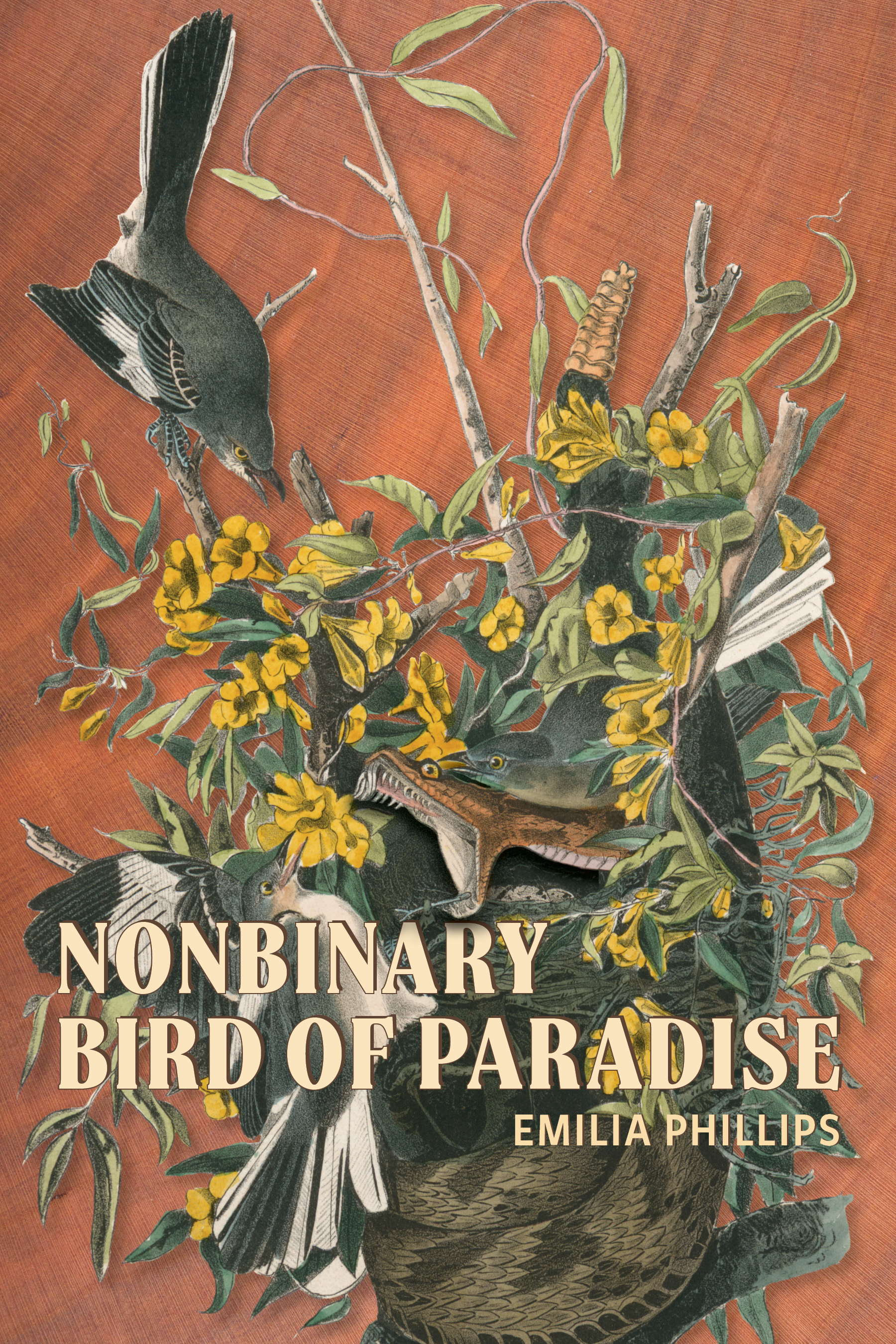
With all the driving I’ve done the last couple weeks, I’ve been drafting poems aloud again & recording them on voice memo. I haven’t yet typed them up but I have transcribed them in my notebook. I’m waiting for the page, at least for a little bit. I will be writing about composing aloud for my next Ploughshares post, and I hope to draw on the experiences of other writers and make connections between craft choices and the method of composition.
Centenary Students at Dodge Poetry Festival

Birch bark for a poem
I picked up this birch bark today & I’m determined to draft a poem on it this weekend. I’ve often found that I can shake up my poems by finding new mediums for writing. 
“Barbie Girl” Exercise for Poetry Workshop
In “Barbie Girl,” students read “Barbie Chang’s Tears” by Victoria Change from their assigned October 2016 issue of Poetry and then take a look at “The Last Mojave Indian Barbie” by Natalie Diaz. In doing so, they consider the ways in which poetry can challenge problematic representations in popular culture. Additionally, they are provided with the opportunity to revise a cultural icon through their own persona poem in order toaccurately reflect their own individualized experiences.
“Imitation” Exercise for Poetry Workshop
In this exercise, my Poetry Workshop students are introduced to poetic imitations by imitating the poems from the October 2016 issue of Poetry they chose to present in class.
Handout for “Walk the Line: The Tension Between Line and Syntax”

The handout for “Walk the Line: The Tension Between Line and Syntax,” tomorrow’s course at the Hudson Valley Writers’ Center, is now available on my Google Drive.
Class at Hudson Valley Writers’ Center Tomorrow!
Tomorrow, I’m teaching a one-day course called “Walk the Line: The Tension Between Line & Syntax” at the Hudson Valley Writers’ Center in Sleepy Hollow, New York. We will consider the relationship between poetry’s vehicles of meaning: the line and the sentence. In doing so, we’ll investigate the ways in which these structures support, nuance, and deny one another to achieve resonance, depth, and subtext within a poem. This course will be generative, with exercises that rely on close reading and formal manipulation of texts, as well as the drafting of new pieces. Whether you want to learn more about what your favorite poets are doing with their poems or discover how to break lines in your own, this course will insist that poetry is a craft, honed by exercises and study.
When I finalize the course packet, I will share it here on Ears Roaring with Many Things. If you’re still interested in signing up, register through the HVWC website.
Photos from Field Trip to Princeton
On Wednesday, September 21st, I took my five Poetry Workshop students to see a Reading by Jenny Johnson and Joy Williams at Princeton University.


Broad Strokes of Modernism Presention for Literary Editing & Publishing
In this presentation, I’m giving my undergraduate Literary Editing & Publishing a little context of modernism and it’s motivations with the hope that they will make the connections between the advent of modernism and the emergence of little magazines. Prior to this discussion, my students will have read several essays in Paper Dreams about literary magazine publishing in the early half of the 20th century.
Introduction of Literary Publication History in Literary Editing & Publishing
Thanks to David Gants at Florida State University for posting some of his course material, including a “Book History Timeline,” from his 2007/2011 ENG 5933: History of the Book, as it proved to be incredibly useful in my ENG 3099: Literary Editing & Publishing course at Centenary University. Yesterday, I gave a brief presentation on the history of the book in order to ask the question, where should we begin our investigation into the history of literary publications, including the focus of our course, literary magazines. I linked to Gants’s timeline on my Moodle for students to read, and, throughout the presentation, we discussed the history of writing, texts, and books in broad strokes, from cuneiform to the little magazines (The Dial, The Little Magazine, and Poetry) of the early 20th century. Students arrived in the lecture having read selections on the history of the literary magazine from Paper Dreams: Writers and Editors on the American Literary Magazine.
 Emilia Phillips