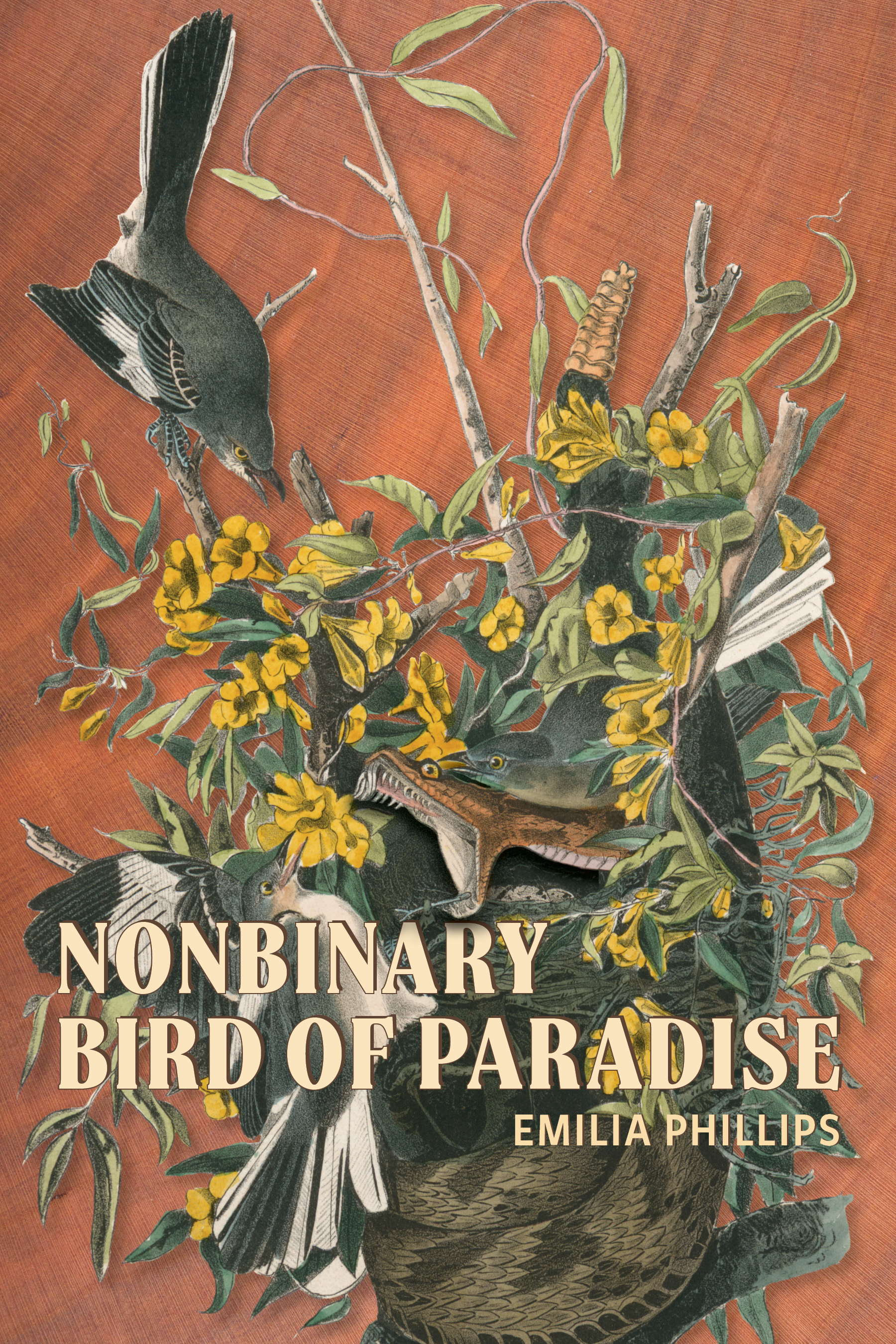
University of Akron Provost Mike Sherman sent out this statement to Akron employees about the future of the University of Akron Press, my publisher. The statement doesn’t mention publishing any other books beyond what’s already under contract, and there’s not any revelation about the future of the Akron Series of Poetry & Poetics. I have applied for pro bono representation from the Volunteer Lawyers for the Arts (VLA) through the Cleveland Bar.
Dear Colleague,
I want to update you on developments concerning the University of Akron Press, which is transitioning to University Libraries.
I am pleased to announce that Dr. Jon Miller, associate professor of English, has agreed to serve as transitional director for the University of Akron Press. Dr. Miller has published two books with UA Press; served on the Faculty Senate’s Library Committee for six years, including the last two as its Chair; and, has significant experience as a scholarly editor of journals, an encyclopedia, and critical editions.
Dr. Miller will work with Tom Bacher, current UA Press director, and Phyllis O’Connor, interim dean of University Libraries, to manage the current activities of the UA Press (acquisitions, editing, marketing, distribution, etc.) and recommend a staffing and operational plan to meet obligations for previously published and currently contracted publications. As part of this process, they will determine how the Press’ future operations are incorporated into the ongoing strategic planning relating to University Libraries. Dr. Miller also will help strengthen opportunities for University of Akron students to publish their scholarly works and to learn about careers in editing and publishing through internships and classroom experiences. In addition, he will ensure that IdeaExchange@Uakron continues to showcase the research-based information generated from faculty and students.
The University’s three-year financial plan approved by the Board of Trustees in June includes a strategic investment fund to enhance the academic mission of the University. That fund will be accessed to help facilitate the transition of the UA Press to UA Libraries.
We will continue to update you on these and other developments in the weeks ahead.
All the best,
William M. “Mike” Sherman
Senior Vice President, Provost and Chief Operating Officer
August 11, 2015
Proposal for a new form, because I’m writing in it . . .
A “Boulder” is wedged somewhere between a prose poem and a micro-essay, as if between a rock and a hard place, but gestures toward fiction through its willingness to engage in absurd scenarios instigated by the true occasions or circumstances introduced in the title. At under 500 words, it is a rhetorical form that posits itself as another form (i.e. a disclaimer, parable, alternate history, etc.) and it must respond in some way to STUPID SHIT (i.e. sexist, discriminatory, or otherwise dumb-dumb things) said to the speaker. Figuratively, the “Boulder” can be seen as a roadblock, avalanche, or agent of Wile. E. Coyote-style injury.
I have written three so far and I’ve started several more. An example of one of the titles: “An Alternate History In Response to the Man Who Told Me Canned Biscuits Ruined America.”
Genre: Poetry Purpose:To push the boundaries of the line, sentence, and punctuation to add subtext and texture to poems Readings: Lynda Hull, Claudia Emerson, Ocean Vuong, Tarfia Faizullah, Jamaal May, Ross Gay
*This prompt was given to Mary Szybist’s workshop at the 2015 Kenyon Review Writers’ Workshop
In this prompt, I’d like for you to explore the ways in which you can complicate your poems with subtext and refine them with dramatic, imagistic, and rhythmic textures through the relationship between the line/form and the sentence.
Write a heavily enjambed poem about deceit, doublespeak, a fallible memory, or letting someone down easy. Each line of this poem must make its own kind of sense separate from the sentence(s) to which it belongs. Each line may support, nuance, or buck against its parent syntactical meaning(s). Take a look at Lynda Hull’s “Rivers Into Seas.” In order to examine this phenomenon, it might be helpful to read the poem for its sentences initially, and then reread it line-by-line with an exaggerated pause at each break. What lines assert themselves as a complete thought, sentence, or image? How does that relate to the syntax?
Write a poem that takes the first prompt further by including little or no punctuation. Choose whether or not you’d like to introduce alternatives to traditional punctuation, through in-line white space (also called visual caesuras) as found in Claudia Emerson’s “Midwife”; line breaks, like those in Ocean Vuong’s “Ode to Masturbation”; capitalization at the start of sentences; or some combination. (Keep in mind that in-line white space also can be used as a means to emphasize certain images or phrases; to modulate the reader’s pace; or to imitate an action taking place in the poem.)
Write a poem in one sentence or run-on sentence that uses the line as a break for breath that befits the action of the poem or the way in which the speaker might tell the story. See Ross Gay’s “For Some Slight I Can’t Quite Recall.”
Genre: Poetry Purpose:To consider how form changes meaning, emphasis, and tone; to practice imitation Readings: “Envy of Other People’s Poems” by Robert Hass along with excerpts of poems by Larry Levis, Terrance Hayes, Natalie Diaz, Lynda Hull, George Oppen, and Linda Gregerson
Let’s look at “Envy of Other People’s Poems” by American poet Robert Hass. I’ve removed the lineation so that the poem appears as prose:
ROBERT HASS “Envy of Other People’s Poems”
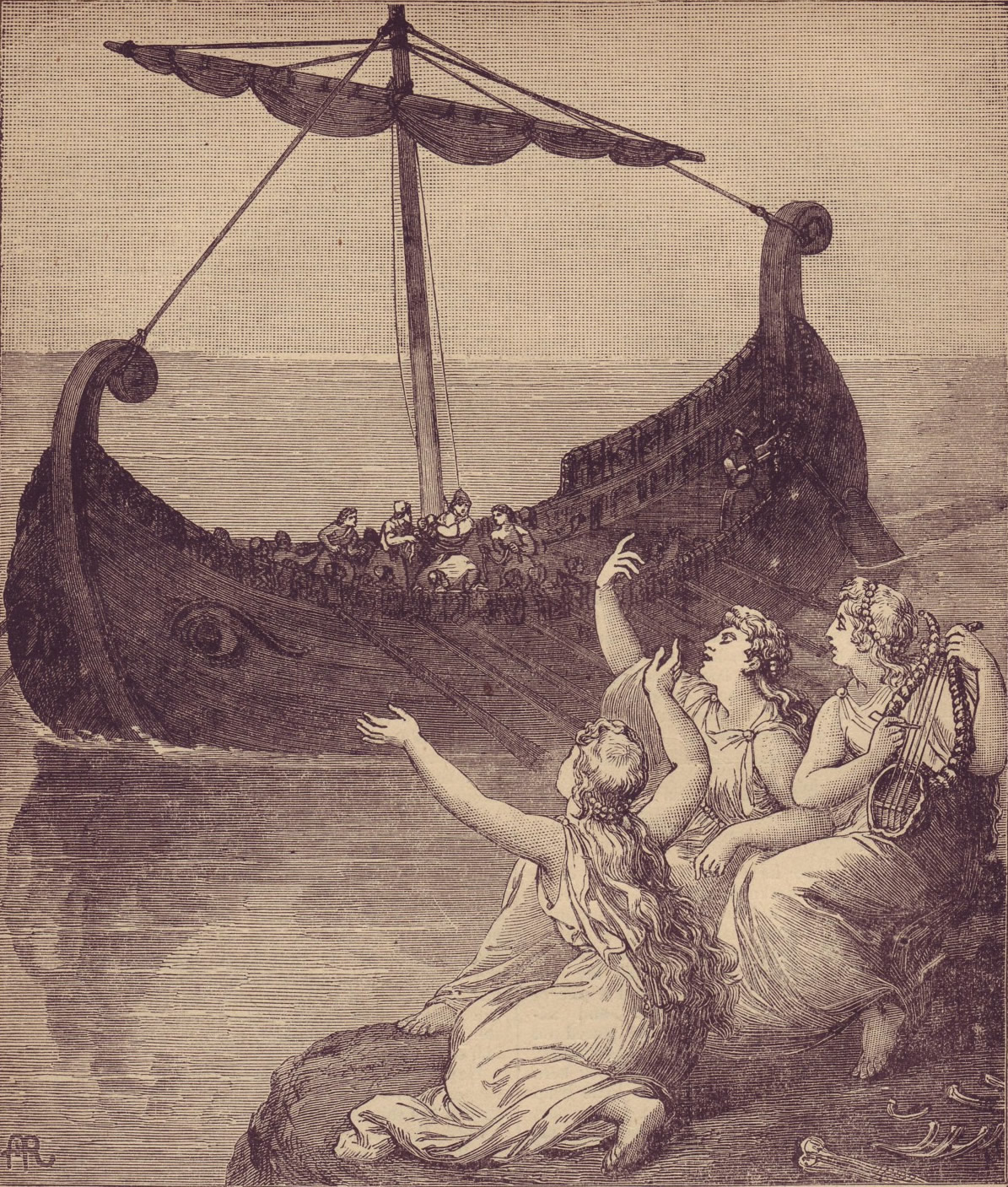
In one version of the legend the sirens couldn’t sing. It was only a sailor’s story that they could. So Odysseus, lashed to the mast, was harrowed by a music that he didn’t hear—plungings of the sea, wind-sheer, the off-shore hunger of the birds—and the mute women gathering kelp for garden mulch, seeing him strain against the cordage, seeing the awful longing in his eyes, are changed forever on their rocky waste of island by their imagination of his imagination of the song they didn’t sing.
With this poem as our foundation, let’s consider the symbiotic relationship between a poem’s subject matter and language. For the purposes of this class, “form” will be used less to talk about received forms like sonnets or ghazals but more about the format of the poem on the page, including its line length, breaks (enjambments and end-stops), drop lines, stanzas, etc.
Escape in Brilliant Highways: A Form Imitation Exercise
Read the following excerpts from poems by other poets and reformat the Hass poem using the formal principles apparent in each of the excerpts. Keep in mind you shouldn’t rewrite any language of the poem; only manipulate line and stanza breaks, indentions, and spacing. As you read each excerpt, make notes about unifying formal strategies that you must include in the formal imitation.
a.
LARRY LEVIS Excerpt from “Anastasia & Sandman”
The brow of a horse in that moment when
The horse is drinking water so deeply from a trough
It seems to inhale the water, is holy.
I refuse to explain.
When the horse had gone the water in the trough,
All through the empty summer,
Went on reflecting clouds & stars.
The horse cropping grass in a field,
And the fly buzzing around its eyes, are more real
Than the mist in one corner of the field.
Or the angel hidden in the mist, for that matter.
b.
TERRANCE HAYES Excerpt from “At Pegasus”
They are like those crazy women
who tore Orpheus
when he refused to sing,
these men grinding
in the strobe & black lights
of Pegasus. All shadow & sound.
“I’m just here for the music,”
I tell the man who asks me
to the floor.
c.
NATALIE DIAZ Excerpt from “Cloud Watching”
Betsy Ross needled hot stars to Mr. Washington’s bedspread—
they weren’t hers to give. So, when the cavalry came,
we ate their horses. Then, unfortunately, our bellies were filled
with bullet holes.
d.
LYNDA HULL Excerpt from “Tide of Voices”
At the hour the streetlights come on, buildings
turn abstract. The Hudson, for a moment, formal.
We drink bourbon on the terrace and you speak
in the evening voice, weighted deep in the throat.
They plan to harvest oysters, you tell me,
from the harbor by Jersey City, how the waters
will be clean again in twenty years. I imagine nets
burdened with rough shells, the meat dun and sexual.
e.
GEORGE OPPEN Excerpt from “Myth of the Blaze”
night – sky bird’s world
to know to know in my life to know
what I have said to myself
the dark to escape in brilliant highways
of the night sky, finally
why had they not
killed me why did they fire that warning
wounding cannon only the one round I hold a
superstition
because of this lost to be lost Wyatt’s
lyric and Rezi’s
running thru my mind
in the destroyed (and guilty) Theatre
of the War I’d cried
f.
LINDA GREGERSON Excerpt from “Sostenuto”
Night. Or what
they have of it at altitude
like this, and filtered
air, what was
in my lungs just an hour ago is now
in yours,
there’s only so much air to go
around.
After creating your formal imitations of “Envy of Other People’s Poems,” reflect on each of these imitations and jot down your thoughts to these questions: How has the new form changed the poem? Has the meaning or tone changed? How so?
Discuss.
Now, let’s look at the Hass poem formatted as the author intended it.
ROBERT HASS Envy of Other People’s Poems
In one version of the legend the sirens couldn’t sing.
It was only a sailor’s story that they could.
So Odysseus, lashed to the mast, was harrowed
By a music that he didn’t hear—plungings of the sea,
Wind-sheer, the off-shore hunger of the birds—
And the mute women gathering kelp for garden mulch,
Seeing him strain against the cordage, seeing
the awful longing in his eyes, are changed forever
On their rocky waste of island by their imagination
Of his imagination of the song they didn’t sing.
Discuss. What are your reactions to the poem? Why did Hass format the poem the way that he did? What might subject matter have to do with the format? How did reformatting the poem reveal the author’s intentions about his form? How does the meaning of the poem change based on its form?
I’m going to miss these guys! Top row: Jess R., Biqiao; middle: Christina, Sam, Bailey, Paul; bottom: Julia, Sabrina, Jess B., Kaitlin, Brittany, Stuart, (^me), and Timmy. Good luck, you guys!
Genre:Poetry Purpose:To consider how persona, point of view, voice, argument, and empathy can support and/or complicate one another Readings: “Skinhead” by Patricia Smith
Jot down some notes about a situation in which you found yourself in direct opposition with someone else. Perhaps it’s as extreme as the violent racism in Smith’s poem or as routine as having the same seat number assignment as another person on a flight. The best situation is one in which the conflict was never or not easily resolved. (2–5 min.)
Describe the diction that person uses and provide some examples. (1–2 min.)
Now freewrite in the voice of that person as if he or she is addressing you. What would they say? How would they defend themselves against complaints about their actions toward you. (5–7 min.)
Share your efforts. Did the exercise of writing in their voices change your opinions of your adversaries? What does this reveal about poetry’s ability to engage in empathy? Do your opinions carry into your rendering of their voice?
A nurse and a surgeon, both wearing gown and mask. Etching by H.A. Freeth. (File via Wellcome Images.)
The plastic surgeon had thumbed three syringes of lidocaine into my cheek and made his first incision when he asked me what I teach. It was late spring 2013, and this was the first of several surgeries I’d have in the coming year and a half to remove melanoma, expand margins, and later reconstruct what another doctor called my architecture. “Oh-eh-ree,” I said, drooling-numb, but he didn’t—or pretended not to—understand. He squinted at his work, like a copyeditor examining a comma, and warbled, “Come again?”
My lips refused the consonants, especially that p, but after several gos, a few tugs on my cheek, and the doc’s distracted grafts of discernible words onto my guttural sounds (chemistry? herbology?), he gasped into a full belly laugh, the scalpel bobbing above my right eye.
I’m not sure how I would’ve made an expression then, or what it would’ve conveyed, but he caught it. “Ohh, you’re serious. Sorry, ” he switchbacked. “I just didn’t know that anyone reads that anymore, must less teaches it!”
That cosmetic surgeon, more anti-Muse than Jacob Marley, wraiths into my mind every time I encounter and attempt to answer the question Is poetry relevant?, a favorite wheelspinner among cosmopolitan op-eds. Although the doc’s latex-pinched fingers anviled my head against the exam table as he excised the mole, my shoulder devil still swaggered—Tell him, “Hey, buddy, I deal in real beauty”—but even that defense seemed to helium up the misconception that the work of poetry is delicate—lace doily stuff.
Prior to going back to clinical surgery, I’d spent thirty minutes or more with patients who were open—even loud—about their Botox and lipo treatments at the receptionist’s window. The waiting room had felt more like that of a salon or spa than a doctor’s office: all gossip, emery boards, beauty magazines, and cell phones. I’d passively protested by re-reading Ovid’s Metamorphosis. And the irony wasn’t lost on me.
Later that day, I wrote a poem that exemplifies the essential connections I’d like to make between my work as a poet and as a teacher, and, in its discussion, offers one of my student’s rebuttal to the doctor’s dismissal of poetry.
I’d like to share the poem for you now, and then I’ll illustrate some of the practical and conceptual ways teaching has nuanced my writing and clarified my feelings about poetry’s relevancy. The poem is called “Reading Ovid at the Plastic Surgeon’s” and it begins with an epigraph from Elizabeth Bishop’s “In the Waiting Room.”
Reading Ovid at the Plastic Surgeon’s
I scarcely dared to look
to see what it was I was.
No one else with a book, the slick
weeklies gossip amongst
themselves on the side
tables as the ticker rolls the Dow
Jones downdowndown under
a profile of the marathon
bombers (the older, a boxer). Jove
argues for the removal of a race
of peoples that do not please
him: What is past
remedy calls for the surgeon’s knife. He will take a hunk of my
cheek (cancer) and though I can’t
see mid-procedure, I imagine
the site as an apricot, bitten.
This, a survival mechanism—
romanticism. David says, If you’re out
in public and you don’t want anyone to talk to you, bring a book
of poetry. Even as I enter the confidence
of the room, I avoid my
reflection in the window, for there,
most of all, I see myself as only I can,
as only the eye will have me—
as light, as light alone.
I chose that Bishop quote not only because of its situational associations—she’s looking at a National Geographic while waiting on her Aunt Consuela at the dentist—but because of its implied self-assessment: if she scarcely dared to look to see what it was she was then, then we might assume she does look to see what she was, and therefore is, in the poem.
In my poem, I wind up on the notion that all we see of ourselves is really just light, something untenable and transcendent. In this way, all our memories of self and personal experience are memories of light. It makes what we witness—violence, racism, greed, the degradation of our own bodies—both less threatening (it’s just light) and more so: What are we dealing with if we’re not dealing with something that we can trap, contain?
Although “Reading Ovid at the Plastic Surgeon’s” doesn’t take on teaching as its dramatic situation, the way that Philip Levine’s “M. Degas Teaches Art and Science at Durfee Intermediate School, Detroit 1942” or Claudia Emerson’s “Student Conference” do, the poem outright invokes advice from one of my own teachers and teaching mentors—David Wojahn, whom I assisted in two classes and who served as my thesis adviser in grad school—as well as exemplifies both practical and conceptual effects on my writing of teaching, namely a shift toward musical plainspokenness and the realignment of empathy’s presence and function in my poems.
Shift in Diction
Back when I was in graduate school and my primary job was to write, David suggested that I read texts that were in, what he called, “English that isn’t English.” This meant Scots-language poets like Hugh MacDiarmid and Kathleen Jamie; the Matthew’s 1537 Bible; and early translations of the Malleus Maleficarum, a 15th-century Germanic witch prosecution manual, and the Turba Philosophorum, an early alchemical text from the 10th century. The texts’ language and, in some cases, their content reinvigorated language’s inherent mystery, that alchemical reaction between sound and meaning, and re-formed the traditional bridge between poetry and incantations, spells, etc. The effect was not unlike that of repeating a word over and over again—banana, banana, banana, banana, or, for you Tennessee Williams fans out there, “Stella! Stella!” It gestures toward the effacement of meaning and the solidification of the word into thingness apart from what it signifies. I want my poems to retain mystery, and to be both about the words and what the words convey, but many of the poems I wrote in graduate school, that later landed in my first book Signaletics, absorbed archaic, obscure, and esoteric language from my reading. Here’s a short passage from another poem that takes reading as its subject matter, titled “Reading Joyce on U.S. Flight 2309.” And, as an aside, I can’t help but wonder how much of a co-conspirator Joyce was in this dictional antiquarianism . . .
Behind you, encorona, the sun,
& I in the grass, looking up, saw a plane
insectile (without my glasses)
fly through your head
in one ear & out the other.
An illusion. The first love poems I knew were
prayers. What then of free fall’s
rash grace, wings sheared & released
into other trajectories? (Daedalus winds
the alleys, gathered as wreckage
in the arms of a harlot.)
“Encorona”: in a crown of sunlight! that nearly scientific “insectile”! These dense linguistic renderings forfeited the attention of some readers, particularly casual ones who value the kind of poetry that penetrates the blood-brain barrier of emotion in seconds flat. (My book’s emotion has more of a extended release effect, and often manifests itself as anxiety about violence in the Middle East and, closer to home, against the body and identity.) In an ultimately positive review of Signaletics, one reviewer suggested the missteps in the book were those places when I used “five-dollar words.”
I still believe this dictional maneuvering was appropriate for the project, as many of the book’s poems situate forensics or, at the very least, the body as its subject matter. The use of such diction mimicked the effect of coming to an obscure piece of “evidence” and having to make sense of it from its context. Additionally, it insists on language’s sovereign thingness—a body itself with tandem mysteries.
Although I wouldn’t go back and change a thing about that first book, I don’t think I could ever write the same poems again. Perhaps it was the death of my half brother in April 2012 followed by my diagnosis of stage-4 melanoma—really misdiagnosis, at least of its severity—in May 2013. Around the same time, however, I also began teaching with regularity, first at VCU and later as the Emerging Writer Lecturer at Gettysburg College.
In the classroom, I found myself realigning my linguistic tendencies in order to make the theory and craft of writing accessible and relevant to my students. I began to value and the teachability of and to spend more time with poems my own post-gradschoolian tastes splashed the “dull as bathwater” judgment on. Suddenly plainspokenness, especially the way it subverted my students’ feelings of inferiority and gave them access to an art form that they’d previously thought archaic in and of itself, became as rich as the elaborate linguistic confections of poets like Hart Crane or H.D. I found that plainspokenness also, in its way, taught students how to read more labyrinthine sentences with totemic diction, at least in how it increased students confidence in their abilities to read poetry. One poem that I teach often—which was also taught to me—is by Belle Waring, who passed away earlier this year, that begins its first sentence in the title:
It Was My First Nursing Job
and I was stupid in it. I thought a doctor wouldn’t be unkind.
One wouldn’t wait for a laboring woman to dilate ten cm.
He’d brace one hand up his patient’s vagina,
clamp the other on her pregnant belly, and force the fetus
through an eight-centimer cervix.
She tore, of course. Bled.
Of course, I worried that content here would dispel the immersive attentions of students who find the words “vagina” and “cervix” still funny, but, on the other hand, when I include this poem in a packet, my students always say its among their favorite poems they’ve ever read. They gravitate toward its candid exposition of narrative and the speaker’s fear, not to mention the conversational asides like “of course” that make the speaking feel authentic and, arguably, intimate, as if she’s telling the story to them herself. The poem later notes with some irony that the doctor was an elder in his church and that, upon delivering a stillborn baby, he “flipped open” the blanket . . .
to let the mother view the body, according to custom.
The baby lay beside her.
He lay stretched out and still.
What a pity, the doctor said.
He seized the baby’s penis between his own forefinger and thumb.
. . .
Look, said the doctor. A little boy. Just what we wanted.
His hand, huge on the child, held the penis as if he’d found
a lovecharm hidden in his grandmother’s linen.
And then he dropped it.
The doctor leaves without telling the baby’s father, forcing the speaker, inexperienced and in shock, to deliver the news. With mostly long, end-stopped lines in couplets, the poem doesn’t look like the whittled poetic miniatures my students read in high school, and while it does use literary devices like simile, nothing feels ornamental.
This exposure to and engagement with uncoded diction and plainspokenness—that means what it says and says what it means—particularly influenced my poems about my half-brother’s death and my cancer, including “Reading Ovid at the Plastic Surgeon’s.” Too much poeticizing didn’t seem appropriate for the subject matter, and I found myself—appropriately, as my students had pushed me in this direction—wanting to tell these poems to an audience not unlike my students, who desired vulnerability in both emotion and language. Because of teaching, my relationship to language has pangeacally realigned, away from the interior and intuitive to the conversational and exploratory.
If I had written “Reading Ovid at the Plastic Surgeon’s” prior to this shift, I would’ve likely landed on a revelation of an image delivered so that the image felt estranged from the reader through a dictional obscurity, as a means to mimic the speaker’s own feelings of estrangement from her own image. Now, however, I can produce this effect without obscure diction, so that the reader doesn’t have to extrapolate what the speaker is thinking from the image but receives this information from the speaker herself: “I see myself as only I can, // as only the eye will have me— / as light, as light alone.” This, of course, means that the reader doesn’t only have to connect to the speaker intellectually but is actively acting upon an empathetic response.
Empathy and Relevancy
Teaching hasn’t only engineered technical shifts in my writing, it’s also influenced my the function of empathy in my poems.
I once had a student who balked at a short story called “Section 8” by Jaquira Díaz, a fierce rendering of a Latina girl’s struggle with juvie and her sexuality. “This isn’t relatable,” my student scoffed, “I don’t know why we’re reading it.”
At that moment, I banned the word “relatable” from my classroom, as it presupposes that all literature must appeal to all readers’ personal experiences and rejects the possibility that it’s the reader’s job to do that relating. (And it is the reader’s job!) I likewise vowed that all of my class texts would expose students to a variety of voices and backgrounds, as a means to honor Mark Doty’s notion that “Literature makes other people more real to us.”
As I’ve read more diverse texts with my students, our conversations include both craft issues and social concerns. In my fall Writing Poetry class, my students and I looked at poems that were in conversation with the events in Ferguson, poems like Jake Adam York’s “Postscript,” Lucille Clifton’s “Jasper Texas, 1998,” and Danez Smith’s “Alternate Names for Black Boys.” When one student, whose primary class persona was charismatic Devil’s Advocate, then said that he felt that poetry wasn’t relevant and couldn’t enact any change, several other students, all young women, jumped in before I could propose a counter-argument. “If poetry can help one person understand someone else a little bit better, it matters. It’s relevant,” my student N. insisted.
It’s with this in mind that I take to the classroom and the page, with the hope that I demonstrate empathy and generosity in my own work, bridging the gap with my poems rather than delineating the distance, just as my students have done so in our classroom discussions. I believe that my newest poems, those in my forthcoming second collection Groundspeed and my in-progress hybrid book Bluff, make the personal political, after my student’s idea and with the hope that, like one poem teaching us how to read another, knowing me through my poems will help readers know one another.
Class: Introduction to Creative Writing (The College of William & Mary) Genre:Poetry Purpose:To become more scrupulous readers of poetry
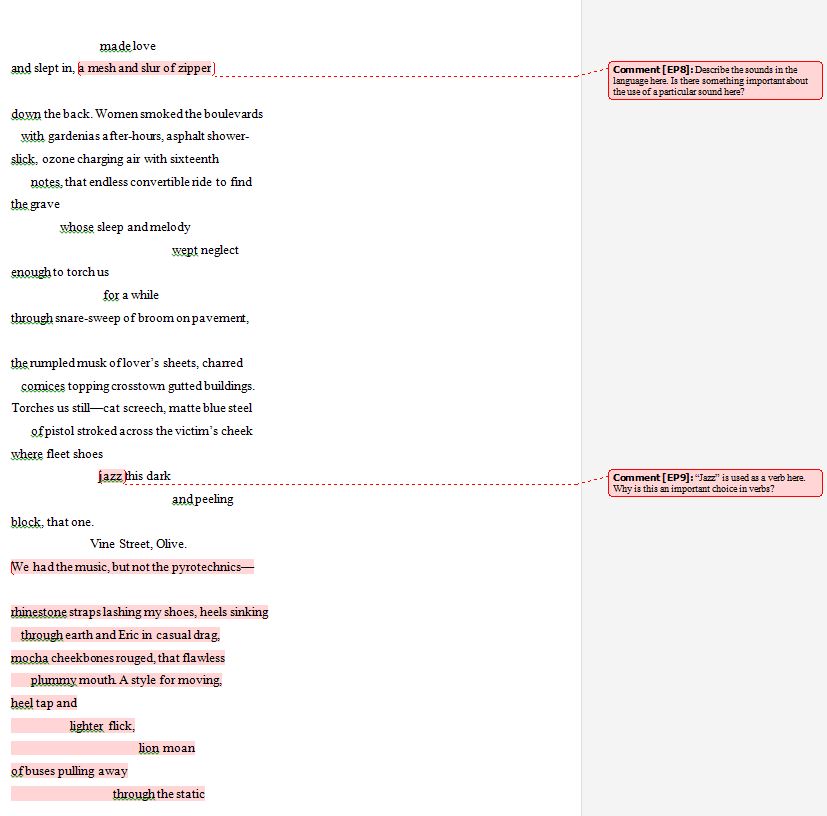
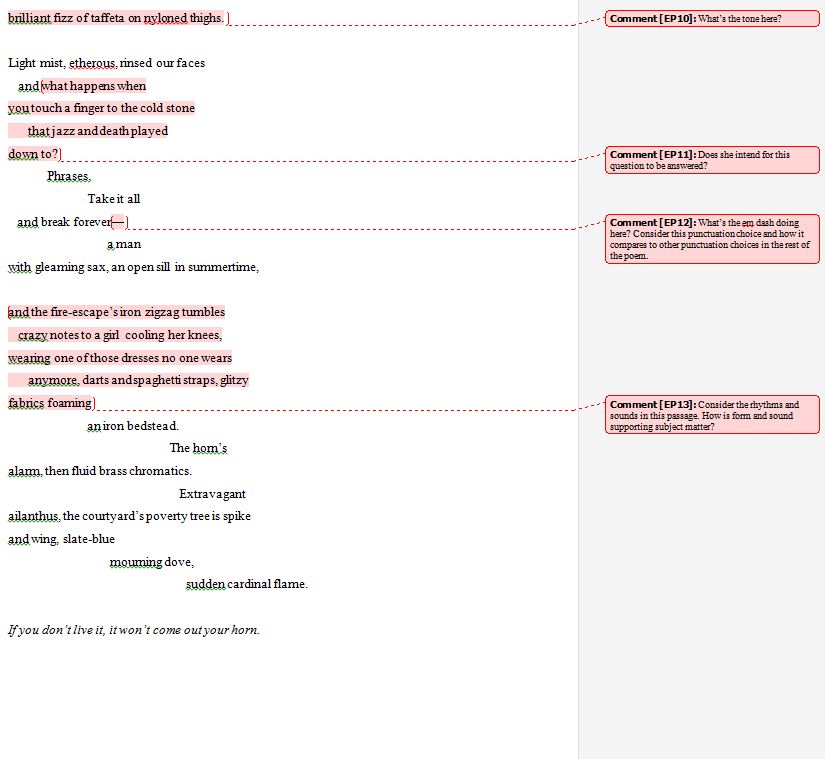
In order to prepare my Intro to Creative Writing students for talking more about poetry with regard to the author’s intentionality before their poetry workshop, I’m asking them to read and examine the poem “Ornithology” by Lynda Hull. They then have to answer questions about specifics in the poem. I’ve provided these questions via track changes in Microsoft Word:
Once they respond to these questions on their own, we will then discuss the possibilities. My hope is that they will see the value in discussing the possibilities rather than strive to make proclamations about what the poem is or what it’s doing.
After they complete the analysis, I’m going to ask them to try to write an imitation of at least ten lines (the formal unit that’s repeated throughout the poem) with special attention to sound and rhythm.
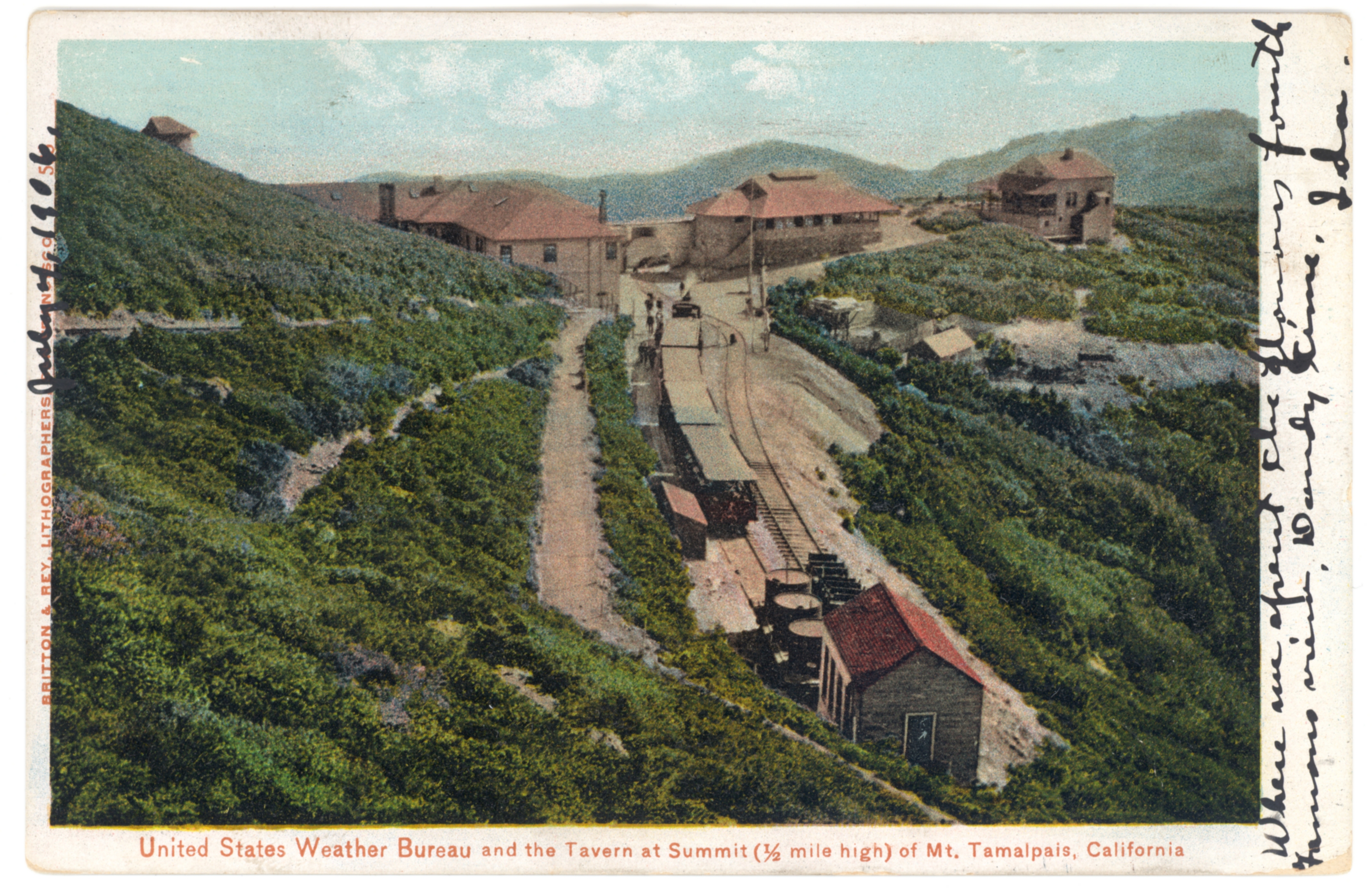
Postcard of the United States Weather Bureau buildings and tavern at the summit of Mt. Tamalpais, Marin County, California, circa 1906. (Source: NOAA Photo Library)
Class: Introduction to Creative Writing (The College of William & Mary) Genre:Poetry Purpose:To consider how language is the raw material with which all writers work and to consider the unique challenges that poetry in translation offers Readings: A packet of poetry in translation
A native speaker of a foreign language that you do not speak has given you a literal translation (that is, a word-for-word rendering) of a poem written by a poet who writes in her language. The native speaker has asked you to further translate the poem so that it makes sense and is a good poem.
The poem’s original language is from a unique language family and shares no roots with English. Because of this, there are some words that are almost untranslatable in English; the native speaker has done her best to provide you with some sense of those words, sometimes substituting phrases or even metaphors for individual objects. Additionally, because the grammar of the original language is so unique, the sentence structure often doesn’t work in English. Not only will you have to find translations for individual words, you’ll have to make sense of those words in foreign syntax.
You read the translation*…
Think Lagunitas business
Loss innovation. It seems that the old way of thinking. The idea, for example, eliminates the sense that the general idea of light. The resurrection of the dead birch, black, the face of the first month, or any other theory of the world tribal carved sad because the skills to deal with the clown Beck, anything associated with Blackberry Blackberry word complaint if it does in this world, it is. We talked last night, my friend, marina trouble hearing sound thin. After that, I knew it from the start, and judges, and chin, hair, and the woman, and you, and I am his wife, and I remember that I love you still, it was several times small shoulders in his hands, and was surprised to see the face of violence, such as the drought and salt and the river of my childhood and Willow Iceland, sad songs levels, such as mud fish, we have a little money should pumpkin orange. It is difficult to deal with. It is necessary if we want to get an external desire eternal. And did the same to him. Reminds me a lot, and his hands and the length of the bread and said that his father hated him because he was asleep. Time was the word supernatural, flesh and body. Love, lunch and dinner, and BlackBerry.
*In order to produce this text, I ran Robert Hass’s “Meditation at Lagunitas” through several different languages (Maori, Chinese Traditional, German, French, Arabic, Finnish, Irish, and Icelandic) in Google Translate before translating it back into English.
The native speaker has also noted that the original poem was in one stanza and contained thirty-one lines. The literal translation, however, is in prose. She has converted the original poem into prose in order to preserve some semblance of the original syntax, and she hints that most of the lines contained between seven and ten words, except the last line, which only contained four.
You get to work and set about your translation systematically:
You assess the overall tone of the poem, considering if it’s joyful, melancholic, bittersweet, or meditative.
You then summarize the poem, identifying its:
setting;
speaker;
addressee (if there is one) and/or audience;
primary themes;
and motivations and/or stakes.
You now notate those places in the poem in which there seems to be some kind of shift in setting, direction, and/or tone. (This could also include an associative leap between images or thoughts. If you notice one of these leaps, briefly summarize the connection.)
You then start the hard work of translating the poem, sentence-by-sentence, for clarity. At this point, you might begin to take some liberties with the text. As you’re revising the sentence, decide if you want to:
change any words or phrases so that the poem will seem more accessible to North American readers (i.e. an American might write “truck” when an English translator would write “lorry”)
or change any language that doesn’t seem essential to the overall meaning of the poem but that might make the poem sound more musical.
Now begin to format the poem for line length, breaks, and stanza structure. Decide whether or not you want to try to mimic the poem’s original format. (If not, make a case for it.)
I really want to teach a generative, one-week intensive creative writing workshop about composition practices. I’ve even written a course description/proposal, with a (rough, working) title:
Composition: What Poems Are Made Of, How Poems Are Made. A generative workshop in which students will draft their own poems using various methods. From composing aloud to writing by hand, typing on a typewriter to typing on a computer, scribbling on butcher paper to limiting oneself to a postcard, we’ll consider how each practice produces different effects on the page. Does composing aloud make the poem more musical? Does a word processor give us greater mobility across the page? For guidance, we’ll start by reading process narratives and poems by published poets, and consider how writing practices and technologies have altered poetry’s content and form.
I think the course would be really wonderful for discovering how our writing processes appeal to different parts of the brain. Students can take these exercises back to their normal writing practice, where they can try out different forms, effects, and content. Who knows, it might be an antidote to “writer’s block.” It will also provide me with an opportunity to engage in this approach of teaching poetry and provide me with insight into using drafting mediums as a pedagogical tool.
Does anyone know of any organizations looking for proposals for short-term intensives? Where would you pitch the idea? I’m thinking it might work best in a non-academic environment.


 Emilia Phillips