My proposal for a new Creative Writing curriculum here at Centenary University went for a full faculty vote today and was accepted. The proposal was fourteen pages, so I’ll only share the new courses, their descriptions and their goals below.
NEW COURSES
- WRI 2005: Intro to Creative Writing
- WRI 2040: Writing Poetry
- WRI 2041: Writing Prose
- WRI 3050: The Form and Theory of Poetry
- WRI 3051: The Form and Theory of Prose
- WRI 3052: Hybrid and Digital Genres
- WRI 3055: Literary Editing and Publishing
PROPOSED COURSE DESCRIPTIONS
WRI 2005 Intro to Creative Writing
4 Credits
This course is designed to introduce students to four primary genres of creative writing: fiction, creative nonfiction, playwriting, and poetry. Students will learn key terminology that will help them understand, analyze, and discuss these genres in a workshop setting. Students will write and contribute original pieces of writing to workshop, a collaborative and evaluative discussion about the writer’s craft, and look to a variety of published writers as guides for incorporating different new techniques into their own work.
Course Objectives
- To introduce students to the fundamental concepts of creative writing
- To differentiate creative writing from academic and scholarly writing
- To learn key terminology that will allow students to workshop their peers’ work
- To encourage creative thinking through in-class writing exercises
- To teach students what to expect from each genre (poetry, fiction, and creative nonfiction) and how to read them
- To ready students for more advanced discussions in genre-specific creative writing courses
Content Areas Covered
- The course will contain units on fiction, creative nonfiction, playwriting, and poetry.
- Imaginative Writing: The Elements of Craft by Janet Burroway, the proposed textbook, covers all four genres and fundamental techniques for beginning creative writers.
WRI 2040 Writing Poetry
4 Credits
Pre- or co-requisites: ENG 1001 and WRI 2005
This course is structured around workshop, a collaborative discussion about writing techniques and their effects on readers. Students will write and submit original poems to the workshop and participate in the discussion of their classmates’ work. As such, the focus of this course is creative output so that students will have a portfolio of original poetry by the end of the semester. Additionally, students are asked to examine the work of contemporary poets in order to learn new techniques and approaches to writing poetry.
Course Objectives
- To further students’ knowledge of contemporary poetry
- To have students create a portfolio of original poetry
- To establish a regular writing and revision practice
- To increase their experience and expertise in a workshop setting
Content Areas Covered
- Students will write at least six original poems for workshop and revise at least three for a final portfolio.
- The course will also focus on three contemporary poetry collections to introduce students to new techniques.
WRI 2041 Writing Prose
4 Credits
Pre- or co-requisites: ENG 1001 and WRI 2005
This course is structured around workshop, a collaborative discussion about writing techniques and their effects on readers. Students will write and submit original prose pieces, including short stories and personal essays, to the workshop and participate in the discussion of their classmates’ work. s such, the focus of this course is creative output so that students will have a portfolio of original prose by the end of the semester. Additionally, students will examine the work of contemporary prose writers in order to learn new techniques and approaches to writing in the prose genres.
Course Objectives
- To further students’ knowledge of contemporary fiction and creative nonfiction
- To have students create a portfolio of original fiction and creative nonfiction
- To establish a regular writing and revision practice
- To increase their experience and expertise in a workshop setting
Content Areas Covered
- Students will write at least four original prose pieces for workshop in addition to in-class writing exercises.
- The course will also focus on two contemporary prose texts or anthologies to introduce students to new techniques.
WRI 3050 The Form and Theory of Poetry
4 Credits
Pre- or co-requisites: ENG 1001 and WRI 2005
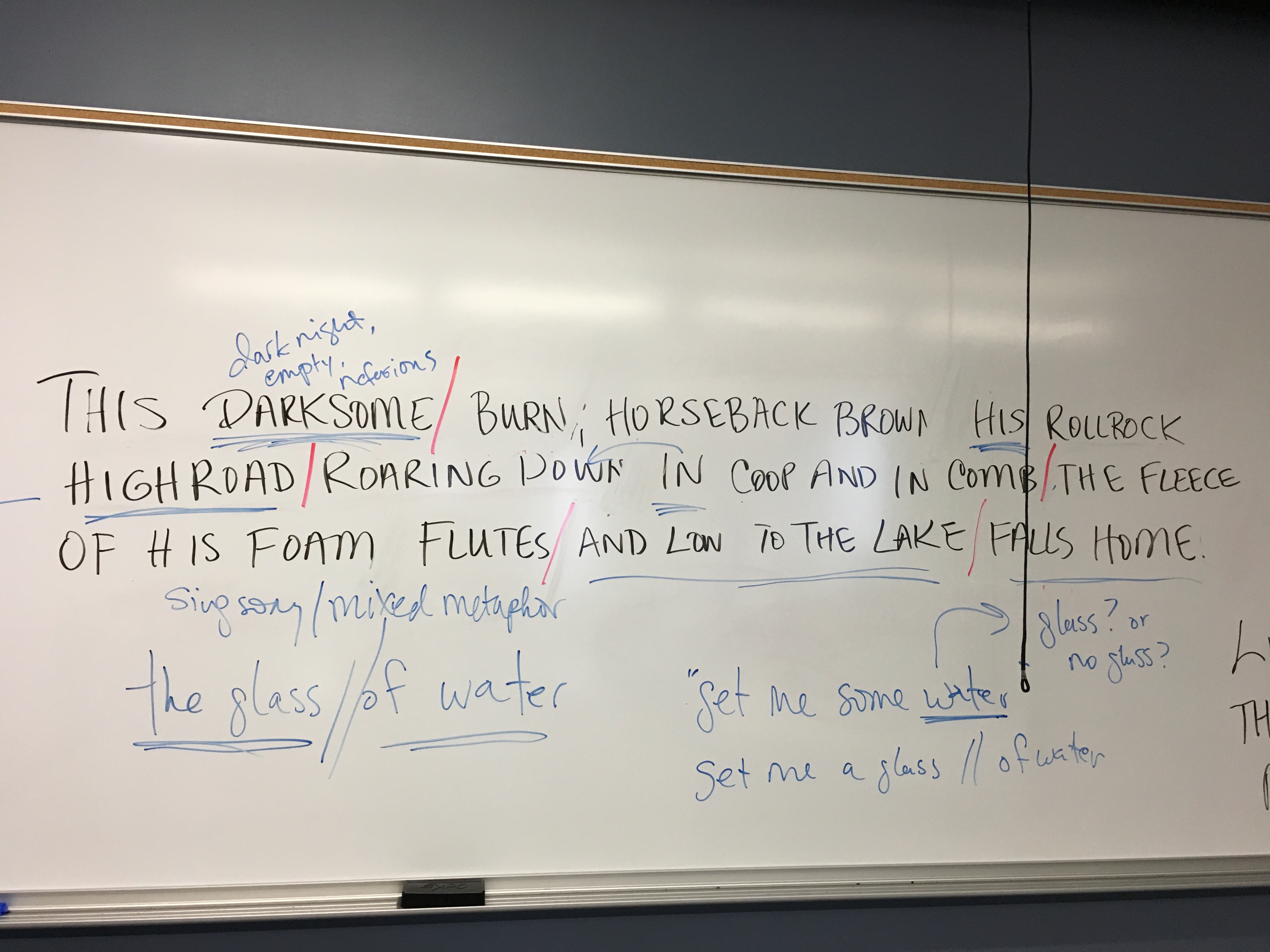
This course focuses on improving skills in the reading and writing of poetry, especially as it relates to considerations of craft, form, and theory of the genre. Students will analyze, practice, and demonstrate elements of poetry construction through critical reading, writing exercises, and collaborative workshop. Using contemporary poetry collections and poetic craft texts, students will develop their skills of “reading like a writer” and situate their own work within poetic theory. Other assignments may include imitations of other writers, scansion of poetic texts, revisions of original pieces, and group presentations on assigned texts. Additionally, they will consider the context and relevancy of poetry in their lives, communities, and culture, and explore the opportunities for serious poetry writers. This course will feature a revolving theme oriented around poetic concepts like a lines and sentences, rhythm and sound, and received forms and prosody.
Course Objectives
- To further students’ knowledge of the history of lyric forms, with special attention to the influences of the 19th and 20th century movement on contemporary verse
- To expose students to the form and theory of poetry by introducing them to received forms (sonnet, ghazal, etc.), contextualizing free verse in literary history, and engaging specific craft concerns including cadence and lineation
- To establish the reading of poetry, canonical and contemporary, as a vital part of the writing practice
- To engage in texts about the craft and theory of poetry so that students have the language to discuss advanced writing concepts
- To have students create a portfolio of original poetry, including specific exercises in form and with prosody
Content Areas Covered
- Students will write biweekly poetry pieces in various forms or using specific techniques.
- The course will introduce students to theories of meter, form, and lineation, in addition to various poetic composition practices.
- The course will pair poems with critical and craft texts that introduce students to the theory and history of poetic form and craft.
WRI 3051 The Form and Theory Prose
4 Credits
Pre- or co-requisites: ENG 1001 and WRI 2005
This course focuses on enhancing skills in writing fiction and/or creative nonfiction, especially as it relates to considerations of craft, form, and theory of the genres. Students will read, analyze, and discuss the contemporary prose texts and incorporate skills learned from the texts into their own work. Using contemporary novels, memoirs, short story and/or personal essay collections, students will develop their skills of “reading like a writer.” Students will regularly participate in in-class writing assignments in order to practice new writing techniques and work in new forms, such as flash fiction, travel writing, memoir, and personal essay. Other assignments for this course include imitations of other writers, revisions of original pieces, and group presentations of assigned texts. This course will feature a revolving theme oriented around literary concepts like world building, character development, and genre expectations.
Course Objectives
- To further students’ knowledge of the history of prose forms, with special attention to the short story, flash and micro fiction, the personal essay, travel writing, and memoir
- To expose students to the form and theory of prose by having them read and imitate the styles of touchstone writers of the 20th and 21st centuries
- To establish the reading of prose and craft texts as a vital part of the writing practice
- To engage in texts about the craft and theory of prose so that students have the language to discuss advanced writing concepts
- To have students create a portfolio of original prose, including specific exercises in various prose forms and imitative styles
Content Areas Covered
- Students will write biweekly prose pieces in various forms or using specific techniques.
- The course will introduce students to theories of prose styles, structures, and forms.
- The course will pair poems with critical and craft texts that introduce students to the theory and history of prose form and craft.
WRI 3052 Hybrid and Digital Genres
4 Credits
Prerequisites: ENG 1001 and WRI 2005
This course will introduce students to hybrid and digital genres of creative writing, including but not limited to the lyric essay, prose poetry, poetry comics, graphic novels, video essays, and digital media storytelling. Students will try their hand at these genres for workshop, and they will likewise try their hand at multi-modal and multimedia composition.
Course Objectives
- To further students’ knowledge of non-traditional genres and forms by having them analyze and create hybrid and multimodal texts
- To expose students to the form and theory of creative writing, especially as it relates to new expressions of genre
- To teach students new technical skills that will allow them to express themselves through multimodal composition
- To engage in texts about the craft and theory of hybrid and digital genres
- To have students create a portfolio of original hybrid and digital works
Content Areas Covered
- Students will explore and compose in hybrid genres like lyric essays and prose poetry, as well as multimodal forms like poetry comics, video essays, and digital media storytelling.
- The class will pair hybrid and digital texts with cutting-edge criticism and craft texts about hybrid and digital genres, relying heavily upon new research into genre theory and digital humanities scholarship.
WRI 3055 Literary Editing and Publishing
4 Credits
Prerequisites: ENG 1001 and WRI 2005
“Editing, like writing, is fundamentally about composing a world,” Peter Gizzi writes in his essay “On the Conjunction of Editing and Composition.” In this course, students will learn how this act of composition takes place, from submissions to printing, by reading first-hand accounts of editors in the profession and through practical application. This reading intensive course will challenge students to read like an editor and consider how literary magazines contribute to literary culture. Although literary magazines will be used as a case study for all publishing inquiries, the book-publishing process and market will likewise be explored. The class will include an investigation into the history of literary magazines; editorial meetings in which students will evaluate and debate sample pieces; papers that analyze literary magazines, editorial roles, and the state of contemporary publishing; and a final editorial project in which student groups will “compose a world” through a mock literary magazine by developing its mission, design, and content. In many ways, this course acts as a kind of introductory practicum for students interested in pursuing future publishing opportunities as editors, production editors, and as writers.
Course Objectives
- To further students’ knowledge of literary editing and publishing by providing them with insight into the book publishing and literary magazine industry
- To contextualize their work as writers within the business of creative writing
- To expose them to the work of editors, agents, and publishers through first-hand accounts in articles and class video conferences with professionals in the field
- To offer students the opportunity to experience the work of creative a literary publication from start to finish with a mock literary magazine project
- To consider the ethics and issues of contemporary publishing, especially as it relates to the decolonization, parity, copyright, and stewardship of literary works
- To explore the history of literary magazine publishing to better understand contemporary trends and advances
- To better prepare students to work in publishing or to engage professionally as writers with the publishing industry
Content Areas Covered
- Students will discover the history of literary book and magazine publishing, consider the ethics and issues in contemporary publishing, and establish best practices for compiling and designing a literary magazine.
- The course will use two texts, Paper Dreams on the history of American literary magazines and Thinking with Type on the materiality and design of texts, along with many supplemental readings that will allow students to contextualize literary publishing within its history and contemporary issues.



 Emilia Phillips