Readings Lists and Course Descriptions for Fall 2014 Semester

With the fall semester starting at Virginia Commonwealth University this week, I have started to think about some new writing and reading exercises for my students. As these exercises will relate with our course goals and readings, I thought I would share my course descriptions and reading lists for my two classes, English 215: Textual Analysis and English 305: Writing Poetry.

ENGL 215: Textual Analysis

Course Description
“The Captive Body, The Body Captivating”—In order to investigate the means by which writers have control over textual bodies, we will examine a century’s worth of narratives about individuals’ control, or lack thereof, over their physical bodies. Beginning with Franz Kafka’s The Metamorphosis (1915) and working our way toward Leslie Jamison’s The Empathy Exams: Essays (2014), we will explore through class discussion and written assignments the relationships between identity, form, and point of view. In doing so, students will hone their abilities as close readers and critical thinkers, analyzing the writers’ choices in presenting these narratives and their effects on the reader, as well as the historical significance of each text and its consequence in today’s debates about individuals’ rights over their own bodies. In addition to the following primary texts, we will also read criticism that reflects a diverse approach to these issues, including new criticism, feminist and queer theory.

Required Texts

  • Atwood, Margaret. The Handmaid’s Tale. Knopf Doubleday, 1998. ISBN: 978-0385490818.
  • Carson, Anne. Autobiography of Red. Vintage, 1999. ISBN: 978-0375701290.
  • Huxley, Aldous. Brave New World. HarperCollins, 2006. ISBN: 978-0060850524.
  • Jamison, Leslie. The Empathy Exams: Exams. Graywolf, 2014. ISBN: 978-1555976712.
  • Kafka, Franz. The Metamorphosis, In The Penal Colony, and Other Stories. Touchstone, 2000. ISBN: 978-0684800707.
  • Morrison, Toni. Beloved. Vintage, 2004. ISBN: 978-1400033416.
  • Nabokov, Vladimir. The Annotated Lolita: Revised and Updated. Vintage, 1991. ISBN: 978-0679727293.
  • Ward, Jesmyn. Salvage the Bones. Bloomsbury, 2012. ISBN: 978-1608196265.


ENGL 305 Writing Poetry

Course Description

American poet C.D. Wright once wrote: “If I wanted to understand a culture, my own for instance . . . I would turn to poetry first. For it is my confirmed bias that the poets remain the most ‘stunned by existence,’ the most determined to redeem the world in words.” In this course, we will hold poetry to this noble standard, as an amplifier for the voices in our culture and an invocatory rendering of our world. In doing so, I’ll ask you to not only read and write poetry but begin to look at your surroundings as a poet would. This requires close examination of images, scrutiny of your thoughts and feelings about subject matter, and consideration for other points of view. Additionally, you will be asked to think deeply about language, in terms of its meanings, its sounds, and its rhythms. You should bring to this class a hard work ethic supported by curiosity and generosity. As a means of introduction to the craft of poetry, students will submit original poems for workshop, a collaborative discussion about writing techniques and their effects on readers. In addition to workshop, you will be asked to engage with the writing of contemporary poets, to read like a writer would. I’ve chosen seven contemporary poetry collections and Poetry magazine so that you will have a lens through which to examine the current landscape of American poetry and to see that even today poets are still trying to “redeem the world in words.”

Required Texts

  • Bendorf, Oliver. The Spectral Wilderness. Kent State University Press, 2014. ISBN: 978-1606352113.
  • Diaz, Natalie. When My Brother Was an Aztec. Copper Canyon Press, 2012. ISBN: 978-1556593833.
  • Emerson, Claudia. Secure the Shadow. Louisiana State University Press, 2012. ISBN: 978-0807143032.
  • Faizullah, Tarfia. Seam. Southern Illinois University Press, 2014. ISBN: 978-0809333257.
  • Reeves, Roger. King Me. Copper Canyon Press, 2013. ISBN: 978-1556594489.
  • Smith, Carmen Giménez. Milk and Filth. University of Arizona Press, 2013. ISBN: 978-0816521166.
  • Trethewey, Natasha. Native Guard. Mariner Books, 2007. ISBN: 978-0618872657.
Conversing Across the Chasm Exercise

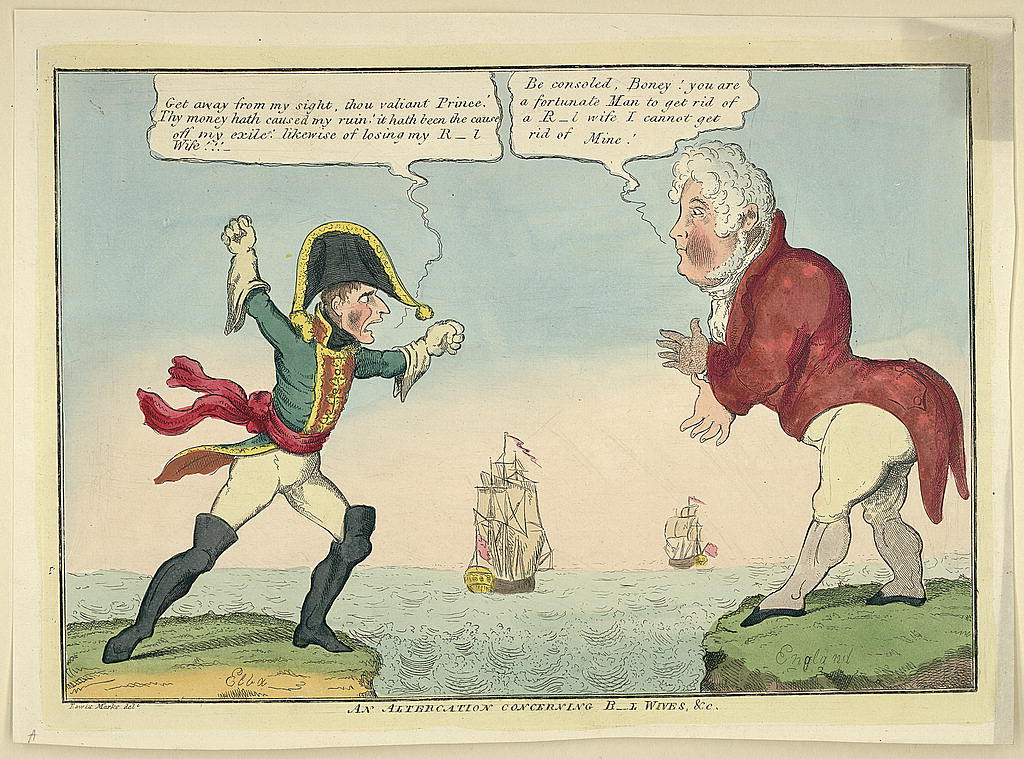
An altercation concerning wives (1814)

Class: Beginning Poetry (Tinker Mountain Writers’ Workshop)
Genre: Poetry
Readings: Each others’ poems
Time: 30 minutes

  1. Each class member should respond to a poem written by the person seated on their right. They can argue or interrogate an idea, provide an anecdotal narrative that relates to the first person, or work associatively away from the original kernel to access something new. Participants should remember their addressee’s personality, concerns, and
  2. The next step has two variations. Students should then write a response to:
    • the response to their own poem so as to create a dialogue between the two poets, or
    • the response written by their original addressee so as to create a chain of communication.
  3. Share.

Imitation, Imitation Exercise

Minerva by Elihu Vedder (1897)
Frontispiece of The Colours of Animals by Edward Bagnall Poulton, showing Mimicry in South African Butterflies (1890)

Class: Beginning Poetry (Tinker Mountain Writers’ Workshop)
Genre: Poetry
Readings: Their selection
Time: 50+ minutes

Ask that the students bring in one of their favorite poems. (My students brought in “Meditation at Lagunitas” by Robert Hass, “Fever 103°” by Sylvia Plath, and “[Carrion Comfort]” by Gerard Manley Hopkins.) Have each student read the selection to the class and lead a discussion on the poem’s features, movement, and form.

Consider some of the ways one can write imitations:
  1. Imitate all or many of the strategies of that specific poem.
  2. Imitate general features of the poet’s style.
  3. Write a poem in the persona of the poet. (His/her general voice, not just the voice on the page.)
  4. Do a loose imitation using one element of the original poem. This could even include response poems, poems with lines of that poet, etcetera.
Then have them do the following exercise:
  1. Write an imitation of the poem you brought in. (15 min.)
  2. Write an imitation of one of the other poems. (15 min.)
  3. Discuss. What imitation strategy did you choose? Why? Did you find yourself more able to imitate your selection or another’s? Why? Which imitation was hardest? Can you more easily discern some of your own fundamental orientation to language, ticks, go-to strategies, etcetera through the imitation process?

Poetry Analysis Exercise

Détail de la carte de Montréal de 1859 faisant ressortir Pointe Saint-Charles.

Class: Intro to Creative Writing
Genre: Poetry
Readings: A poetry packet featuring the poems listed below
Time: 30 minutes

Group 1: “Wherever My Dead Go When I’m Not Remembering Them” (Shapiro) and “In the Waiting Room” (Bishop)
Group 2: “Perpetually Attempting to Soar” (Ruefle) and “The Lovers of the Poor” (Brooks)
Group 3: “Your Wild Domesticated Inner Life” (Banias) and “Dorothy’s Trash:” (Johnson)
Group 4: “My Story in a Late Style of Fire” (Levis) and “The Day Lady Died” (O’Hara)
Group 5: “The Mare of Money” (Reeves) and “In Colorado My Father Scoured and Stacked Dishes” (Corral)
Group 6: “Scrabble with Matthews” (Wojahn) and “Ode to Browsing the Web” (Wicker)
Group 7: “The streetlamp above me darkens” (Faizullah) and “A Pornography” (Rekdal)
Group 8: “To a Fig Tree on 9th and Christian” (Gay) and “Animals Are Passing From Our Lives” (Levine)

Read each poem assigned to your group. Answer these questions:

  1. What’s the dramatic situation of the poem? Meaning, what’s going on? What’s the scene or the conflict? (Ex. For Matthew Olzmann’s “Notes Regarding Happiness,” the speaker is attempting to post a happy birthday message on a friend’s Facebook wall.)
  2. How does each poem get from its beginning to its end? Is it narrative (a story) and therefore moves in a linear fashion? Are there associative connections between images? Examine the relationship between images in these poems.
  3. Describe the tone. Is the poet sincere?
  4. Describe the style of this poem. Is the language conversational or esoteric? What does the poem sound like?
  5. Describe the form of this poem. Is it in couplets? A single stanza? Etcetera? How long are the lines? Why do you think the poet chose this form?
  6. Do these two poets have anything in common in terms of their style, strategies, or motivation for writing?
  7. If you were going to write an imitation of one of these poets, who would you pick? How would you begin? Start drafting a few lines using the strategies you described above.

“Bluets” Exercise

“Dead City III (City on the Blue River III)” (1911) by Egon Schiele

Class: Writing Out of the Ordinary
Genre: Poetry/Nonfiction
Readings: Maggie Nelson’s Bluets
Time: 30 minutes

  • Identify one thing you have been obsessed with for quite some time.
  • Detail a direct encounter with that thing. Be as descriptive as possible.
  • Name the first person you can think of who is missing from your life.
  • Write down something you never told them. (A confession, an idea, a story, etcetera.)
  • Remind that person of something you did together. Tell the narrative.
  • Is there a connection between the thing and the person? Explain.
  • Write down the first thing and then write the next five words that come to your mind in an associative chain from one word to the next.
  • Now pick one of those things on the list and write about an encounter you had with that thing.
  • Repeat previous steps.
  • “Headliner” Exercise

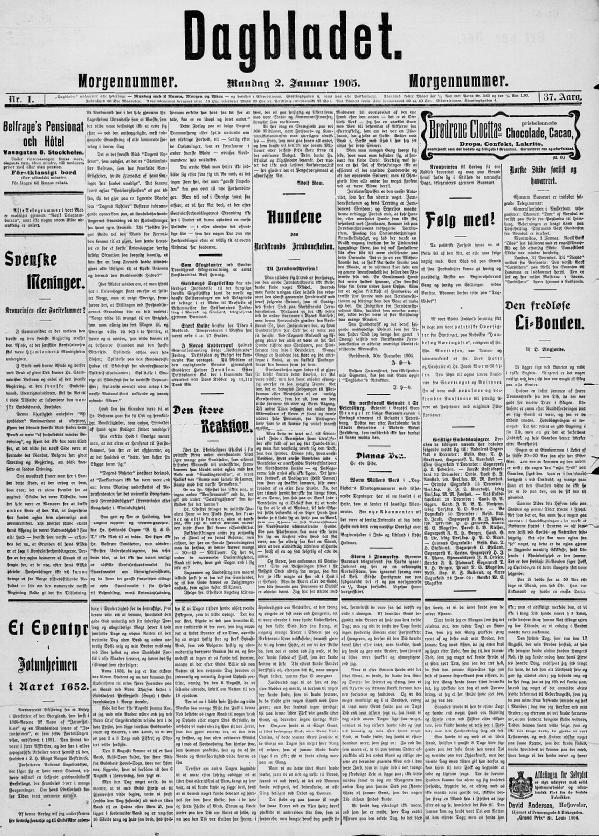
    The front page of the Norwegian newspaper Dagbladet from the 2nd of January 1905. (Published before 1923 and public domain in the US.)
    The front page of the Norwegian newspaper Dagbladet from the 2nd of January 1905. (Published before 1923 and public domain in the US.)

    Class: Intro to Creative Writing
    Genre: Poetry
    Readings: Matthew Olzmann’s Mezzanines
    Time: 20–25 minutes

    Mayor To Homeless: Go Home
    Stabbing Disrupts Anger Management Class
    Missippi’s Literacy Program Shows Improvement
    One-Armed Man Applauds the Kindness of Strangers
    Statistics Show That Teen Pregnancy Drops Significantly After Age 25
    Federal Agents Raid Gun Shop, Find Weapons

    1. Pick one of the (real) headlines above as the title of your poem.
    2. Now begin to write a narrative poem about the situation that provoked the headline.
    3. Go back and read what you’ve written. What else does it remind you of? (The first thing that comes into your head.) Start writing about that.
    4. Go back and read what you wrote about the second thing. What does that make you think of? Write about it.
    5. Is there a way to get back to the first story? Is there something else you missed in the first story? What images connect across each of these stories? How are the motives of the characters different? How are they alike?
    6. Try to work your way back there.
    7. End the poem with an image from the first story.

    “Fame Makes a Man Take Things Over” Exercise

    Drawing of Stage Door Johnnies (1894)
    Drawing of Stage Door Johnnies (1894)
    Class: Writing Out of the Ordinary
    Genre: Creative nonfiction
    Readings: A packet of persona poems and dramatic monologues
    Time: 10 minutes

    1. Pick a celebrity, sports star, cartoon or comic book character, product mascot (ex. Count Chocula, the Geico gecko, etc.) or newsworthy individual (Octomom, Charles Manson, etc.).

    2. Create a mundane problem for that character or person. (Kobe Bryant can’t open a jelly jar. Elvis Presley can’t fit into his old slacks. Speedy Gonzalez gets stuck in a mouse trap.)

    3. Free write for ten minutes in the voice of that character as they’re attempting to resolve the problem. What concerns them? Are they worried about their public image? How does this problem relate to bigger problems for them? What sorts of language do they use? Are they thinking about the problem at hand or something else? Where are they at? More specific questions: What are they wearing? What kind of jelly is Kobe Bryant trying to get into? Strawberry or grape? Who set the trap for Speedy? Has Elvis tried dieting? (Hint: You don’t have to answer these specific questions, but be sure to take leaps like this with your own characters.)

    I’d like to ban the word . . .

    I’d like to ban the word “slumber” from my students’ creative writing. I don’t think I’ve ever “slumbered.” So often, they believe it conveys a softness, but that double consonant “mb” with that unpleasant “er” actually seems more clunky to me that the simple “sleep.” Easy to say for easy sleep.

    Prompts: “The Conversationalist,” “Just a Phase,” and “Witness” for Creative Nonfiction Writing

    Phrenology diagram. From People's Cyclopedia of Universal Knowledge (1883).
    from People’s Cyclopedia of Universal Knowledge (1883)

    A student wrote to me over the weekend to request a prompt for my Intro to Creative Writing‘s 5–7 page creative nonfiction assignment. Although I usually encourage students to locate their own subject matter as it’s a critical skill and they’ll likely care more about their handpicked subjects, I came up with several prompts that I’ll hold onto for future students who need a place to start.

    The Conversationalist
    Is there a story or several stories that you like to tell friends or new people you meet? Is the subject matter related or disparate? Write the story/stories that you tell, and the narrative of telling these stories. How have people reacted? Reflect. Why do you tell these stories? Do you find yourself wanting to create a certain impression on listeners? This piece, as it has three narrative components, has a lot of promise for fulfilling the page requirement.

    Just a Phase
    Was there a time that you tried to “be someone else,” to adopt a different personality? Describe in detail. Did you change your clothes? Your hair? Your interests? Your speech or accent? Many of us go through identity crises especially as adolescents. What did you do while you tried this out? Did you go somewhere? Did you make a fool of yourself or pull it off? When did you realize it wasn’t right for you? Why change? Do you feel nostalgic now? Show this.

    Witness
    Have you ever witnessed something violent, unsettling, or scary? Write about this and your reaction after. How long did it affect you? How did it change you? Did you intervene? Why or why not? Do you regret your decision to become involved or not involved? (See “Accident, June 1948” by Seamus Deane for an example.)

    Homing In On Home Exercise

    Garage met Chauffeurswoning te Zandvoort (1916) by Guillaume Frédéric la Croix
    Garage met Chauffeurswoning te Zandvoort (1916) by Guillaume Frédéric la Croix
    Class: Intro to Creative Writing
    Genre: Creative nonfiction
    Readings: “Notes from a Native Daughter,” “Los Angeles Notebook,” and “Goodbye to All That” by Joan Didion; “Bread” by Jane Brox
    Time: 24 minutes

    1. Describe the home you spent the most time in as a child including its location, distinctive features, the people, the food, the weather, etc. Be as thorough as possible. (7 min.)
    2. Is there something that people often assume about the place that isn’t true? Write an anecdote about a time that someone made a presumption about where you were from. (i.e. Every evening while I had bronchitis I stopped at a pub in Mayfair to have a shot of Jack Daniel’s to ease my coughing before bed. The first night, the bartender asked to see my ID. When I handed him my Tennessee driver’s license, he said, “A Tennessee girls drinks Tennessee whiskey,” and, laughing, “Do you like your country music too?”) (5 min.)
    3. Why do you think that outsiders often assume these things about your home? Speculate about why that is, how long that’s been true, and if it will continue to be true. Why or why not? Use this as a means to tell us a little bit of history about the place you grew up. You can use historical facts, family stories, gossip, rumors, etc. (7 min.)
    4. If you weren’t from the area, how would you view your hometown? Would you visit or move there? Consider several possibilities. (5 min.)

    This exercise allows students to look at a subject from different angles as well as helps them access something personal through exterior descriptions. In much the same way that they saw Didion revealed through the places she talks about (California’s Central Valley, Los Angeles, and New York), students should realize that, by the details they choose to talk about and the perceptions they reject or defend, they do some work to define themselves as well as the place, subject, and—perhaps most importantly—a conflict.