“I look in the mirror and hold up my mangled hand”: An Adversarial Persona Exercise

Jack_dempsey_ring_loc_50497v
Genre:
Poetry
Purpose:
To consider how persona, point of view, voice, argument, and empathy can support and/or complicate one another
Readings:
“Skinhead” by Patricia Smith

  1. Watch Patricia Smith perform “Skinhead”: https://youtu.be/Klb5TniRGao. Discuss.
  2. Jot down some notes about a situation in which you found yourself in direct opposition with someone else. Perhaps it’s as extreme as the violent racism in Smith’s poem or as routine as having the same seat number assignment as another person on a flight. The best situation is one in which the conflict was never or not easily resolved. (2–5 min.)
  3. Describe the diction that person uses and provide some examples. (1–2 min.)
  4. Now freewrite in the voice of that person as if he or she is addressing you. What would they say? How would they defend themselves against complaints about their actions toward you. (5–7 min.)
  5. Share your efforts. Did the exercise of writing in their voices change your opinions of your adversaries? What does this reveal about poetry’s ability to engage in empathy? Do your opinions carry into your rendering of their voice?

“Nobody Knows Your Name” Exercise

Kabuki Marquee (1822) by Utagawa Toyokuni I (Japan, 1769-1825)

Class: Introduction to Creative Writing (The College of William & Mary)
Genre: Nonfiction
Purpose: To explore the self as a character and subject
Readings: Chapters 8 (“Creative Nonfiction”) in Janet Burroway’s Imaginative Writing and “Nobody Knows Your Name” of Eula Biss’s Notes from No Man’s Land

Do you know the story of your name? Its meaning and its history? Do you know why your parents named you what they named you? Are there other famous people with your name? Is your name particularly popular or obscure? What does your last name say about your ancestry, if anything? What are misconceptions about your name? Is your name easily mispronounced or misspelled; if so, give us a narrative about someone getting your name wrong. Are their misconceptions about you based on your name? How would address those who make judgments on a person based on their name? If you don’t know what your name means, speculate and/or invent your own personal meaning for your name based on your experiences, the sounds in your name, etc.. Do you define your name or does your name define you? Write for 10 minutes.

“Encounter” Exercise

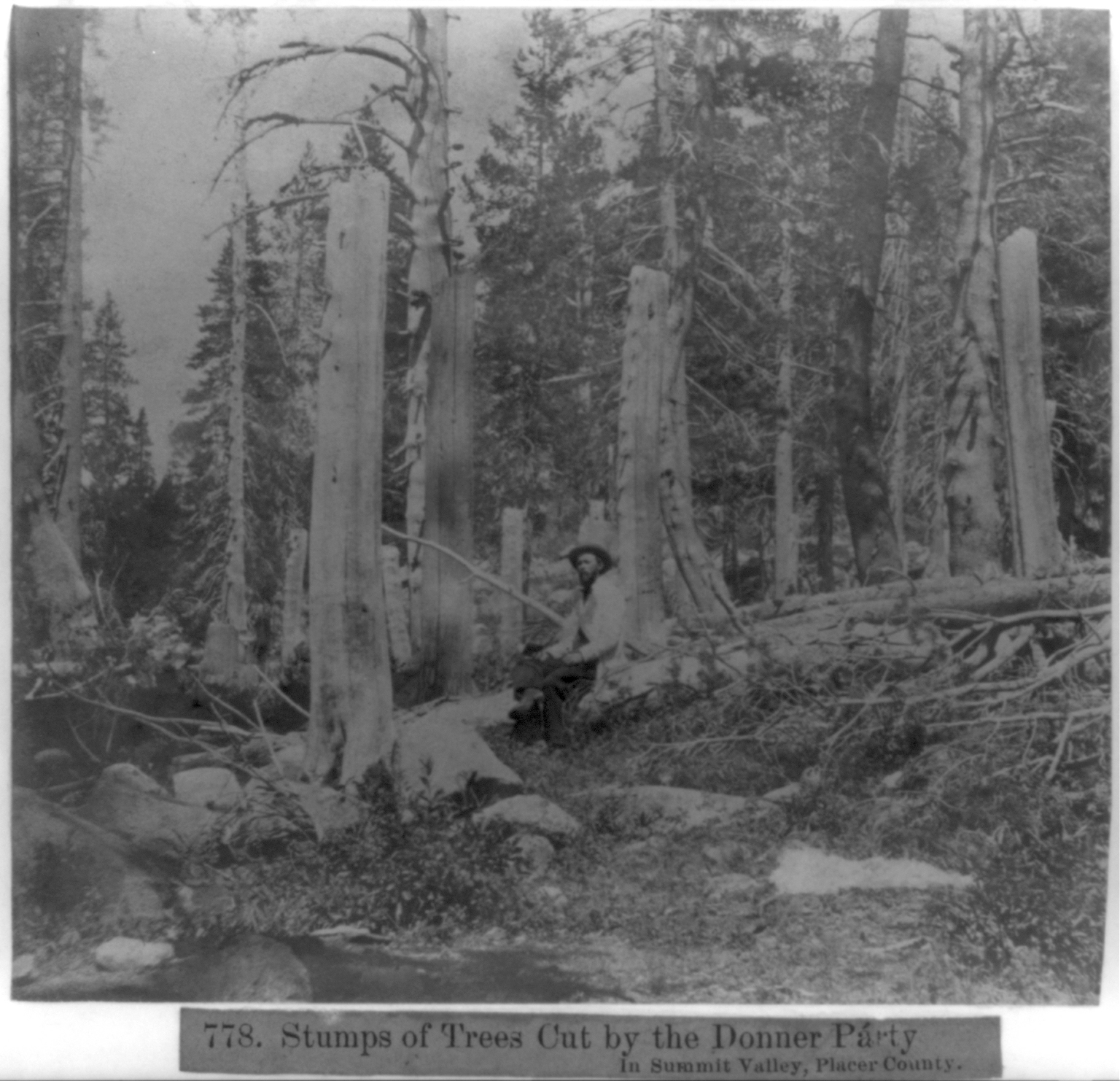
"Stumps of trees cut by the Donner Party in Summit Valley, Placer County" Grayscaled albumen print, half stereograph. (1866) via the Library of Congress
“Stumps of trees cut by the Donner Party in Summit Valley, Placer County” Grayscaled albumen print, half stereograph. (1866) via the Library of Congress

Class: Introduction to Creative Writing (The College of William & Mary)
Genre: Fiction
Purpose: To explore Burroway’s concept of “Character as Image”; examine potential of non-verbal communication; and situate the reader to receive information along with a character
Readings: Chapters 4 (“Character”) and Gabriel García Márquez’s “The Handsomest Drowned Man in the World” in Janet Burroway’s Imaginative Writing

Two characters come upon one another in the middle of a forest. Something bad—but not melodramatic*—has happened to one character and that character needs help. When the first character tries to tell the second what’s wrong, it’s revealed that the two characters don’t speak the same language. (This could include sign language.)

Write a scene from the point of view of the second character (first person “I”) while the first character tries to communicate the problem using only gestures, drawing, or other non-verbal communication. Additionally:

  • the second character cannot know what the problem is before the first character reveals it in this scene;
  • the second character should notice details throughout the interaction that reveal more about the first character (i.e. clothing, appearance, possessions, etc.)
  • the second character may or may not—or even cannot—help.

*Challenge yourself to come up with a problem that doesn’t involve far-fetched plot lines, flat characters, and easy conclusions. This means it would be best to avoid killers, aliens, and monsters. Think about more ordinary but equally tension-filled situations like a farmer whose lost a bull, a teenager who has a flat tire but doesn’t know how to change it, a hunter who accidentally shot his buddy in the foot, etcetera.

“Fame Makes a Man Take Things Over” Exercise

Drawing of Stage Door Johnnies (1894)
Class: Writing Out of the Ordinary
Genre: Creative nonfiction
Readings: A packet of persona poems and dramatic monologues
Time: 10 minutes

1. Pick a celebrity, sports star, cartoon or comic book character, product mascot (ex. Count Chocula, the Geico gecko, etc.) or newsworthy individual (Octomom, Charles Manson, etc.).

2. Create a mundane problem for that character or person. (Kobe Bryant can’t open a jelly jar. Elvis Presley can’t fit into his old slacks. Speedy Gonzalez gets stuck in a mouse trap.)

3. Free write for ten minutes in the voice of that character as they’re attempting to resolve the problem. What concerns them? Are they worried about their public image? How does this problem relate to bigger problems for them? What sorts of language do they use? Are they thinking about the problem at hand or something else? Where are they at? More specific questions: What are they wearing? What kind of jelly is Kobe Bryant trying to get into? Strawberry or grape? Who set the trap for Speedy? Has Elvis tried dieting? (Hint: You don’t have to answer these specific questions, but be sure to take leaps like this with your own characters.)