ENG 2015: Poetry Workshop
American poet C.D. Wright once wrote: “If I wanted to understand a culture, my own for instance . . . I would turn to poetry first. For it is my confirmed bias that the poets remain the most ‘stunned by existence,’ the most determined to redeem the world in words.” In this course, we will hold poetry to this noble standard, as an amplifier for the voices in our culture and an invocatory rendering of our world. In doing so, I’ll ask you to not only read and write poetry but also begin to look at your surroundings as a poet would. This requires close examination of images, scrutiny of your thoughts and feelings about subject matter, and consideration for other points of view. Additionally, you will be asked to think deeply about language, in terms of its meanings, its sounds, its rhythms, and its forms. You should bring to this class a hard work ethic supported by curiosity and generosity. As a means of introduction to the craft of poetry, students will submit original poems for workshop, a collaborative discussion about writing techniques and their effects on readers. In addition to workshop, you will be asked to engage with the writing of contemporary poets, to read like a writer would. I’ve chosen Poetry magazine as our required text so that you will have a lens through which to examine the current landscape of American poetry and to see that even today poets are still trying to “redeem the world in words.”
Required Texts
- Hirsch, Edward. A Poet’s Glossary. Houghton Mifflin Harcourt, 2014. ISBN: 978-0151011957.
- Poetry magazine student subscription, available at https://www.poetryfoundation.org/poetrymagazine/subscribe
ENG 2016OL: Online Prose Workshop
This course will focus on the prose forms of the short story and personal essay, and emphasize drafting and revision. Students will respond to published prose and write their own pieces for workshop, a collaborative discussion about the effects of a writer’s choices on readers. You should bring to this class a hard work ethic supported by curiosity and generosity. We will base our discussions on how texts work rather than what they mean, after Francine Prose’s ideal of “reading like a writer.” We will use Megan Mayhew Bergman’s collection of short stories, Almost Famous Women, and Zadie Smith’s collection of essays, Changing My Mind, as a touchstone for learning writing skills and discovering genre conventions. My approach to teaching writing is founded on the belief that our writing skills must be practiced and cultivated, and that one must continually challenge one’s aesthetics, habits, and concerns throughout one’s writing life in order to write anything of consequence to one’s readers and, perhaps more importantly, one’s self.
Required Texts
- Bergman, Megan Mayhew. Almost Famous Women. Scribner, 2015. 256 pages. ISBN: 978-1476788814.
- Smith, Zadie. Changing My Mind: Occasional Essays. Penguin, 2010. 320 pages. ISBN: 978-0143117957.
ENG 2031: Craft of Prose
In Italo Calvino’s Invisible Cities, Marco Polo tells Kublai Khan that “the city must never be confused with the words that describe it.” In this course, we will shoot high and aim to write so richly and uniquely about our fictional worlds that they will be rendered in our readers’ imaginations as palpable, the words and places indistinguishable, symbiotic, “real.” We will take as our lodestars a number of texts, including Calvino’s Invisible Cities, a short story collection by Centenary’s fall 2016 visiting author Megan Mayhew Bergman, and one of the Harry Potter novels. We will translate these immersive reading experiences into writing skills through discussion, exercises, and workshop. Several times throughout the semester, students will turn in original writing for workshop, a collaborative discussion about writing techniques and their effects on readers, and later revise one of the pieces using the comments received in workshop. Additionally, we will play host to Centenary’s Fall 2016 visiting writer, Megan Mayhew Bergman, and prepare accordingly. You should bring to this class a hard work ethic supported by curiosity and generosity. We will base our discussions on how texts work rather than what they mean, after Francine Prose’s ideal of “reading like a writer.” My approach to teaching writing is founded on the belief that our writing skills must be practiced and cultivated, and that one must continually challenge one’s aesthetics, habits, and concerns throughout one’s writing life in order to write anything of consequence to one’s readers and, perhaps more importantly, one’s self.
Texts and Supplies
- Bergman, Megan Mayhew. Almost Famous Women. Scribner, 2015. 256 pages. ISBN: 978-1476788814.*
- Calvino, Italo. Invisible Cities. Harcourt, 1978. 165 pages. ISBN: 978-0156453806. +
- Everett, Percival. I Am Not Sidney Poitier. Graywolf Press, 2009. 234 pages. ISBN: 978-1555975272. +
- Rowling, J.K. Harry Potter and the Goblet of Fire. Scholastic Paperbacks, 2002. 752 pages. ISBN: 978-0439139601.*
- Russell, Karen. Vampires in the Lemon Grove: And Other Stories. Vintage, 2014. +
- Writing Journal
ENG 3099: Special Topics: Literary Editing & Publishing
“Editing, like writing, is fundamentally about composing a world,” Peter Gizzi writes in his essay “On the Conjunction of Editing and Composition.” In this course, students will learn how this act of composition takes place, from submissions to printing, by reading first-hand accounts of editors in the profession and through practical application. This reading intensive course will challenge you to read like an editor rather than a reader, writer, or critic, and ask you to consider how literary magazines contribute to literary culture. You will be exposed to many different types of editing styles, and you will be asked to begin to cultivate your own approach to editing a literary magazine or journal while being introduced to all the skillsets needed to create a publication. We will use literary magazines as a case study for all of our publishing inquiries, but we will likewise touch upon the book-publishing process and market. The class will include an investigation into the history of literary magazines; editorial meetings in which students will evaluate and debate sample pieces; papers that analyze literary magazines, editorial roles, and the state of contemporary publishing; and a final editorial project in which student groups will “compose a world” through a mock literary magazine by developing its mission, design, and content. In many ways, this course acts as a kind of introductory practicum for students interested in pursuing future publishing opportunities as editors, production editors, and as writers.
Texts and Supplies
- Lupton, Ellen. Thinking with Type, 2nd edition. Princeton Architectural Press, 2010.
- Kurowski, Travis. Paper Dreams: Writers and Editors on the American Literary Magazine. Atticus Books, 2013.
- Art supplies, paper, etc. and whatever else you may need to create your final editorial project.
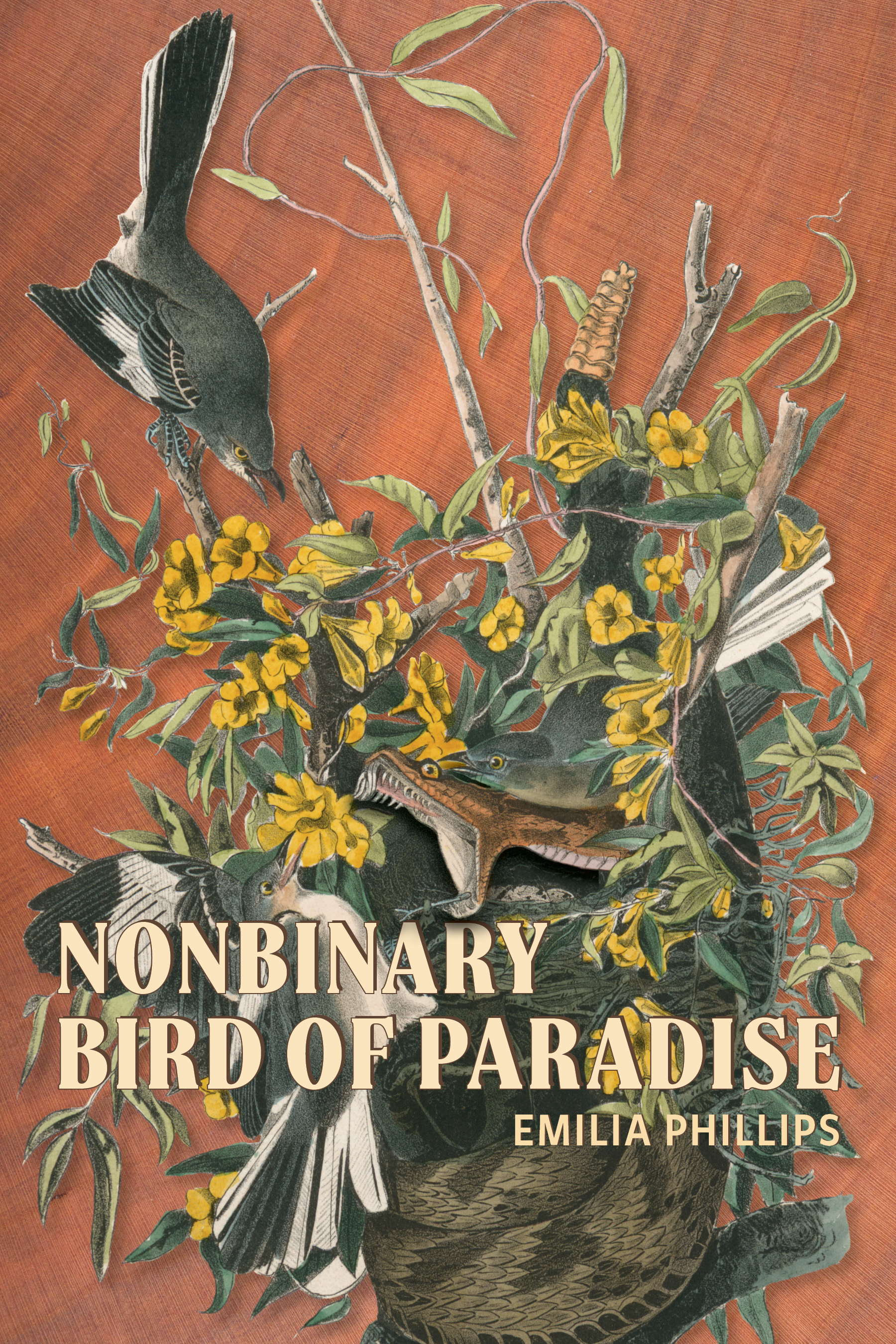
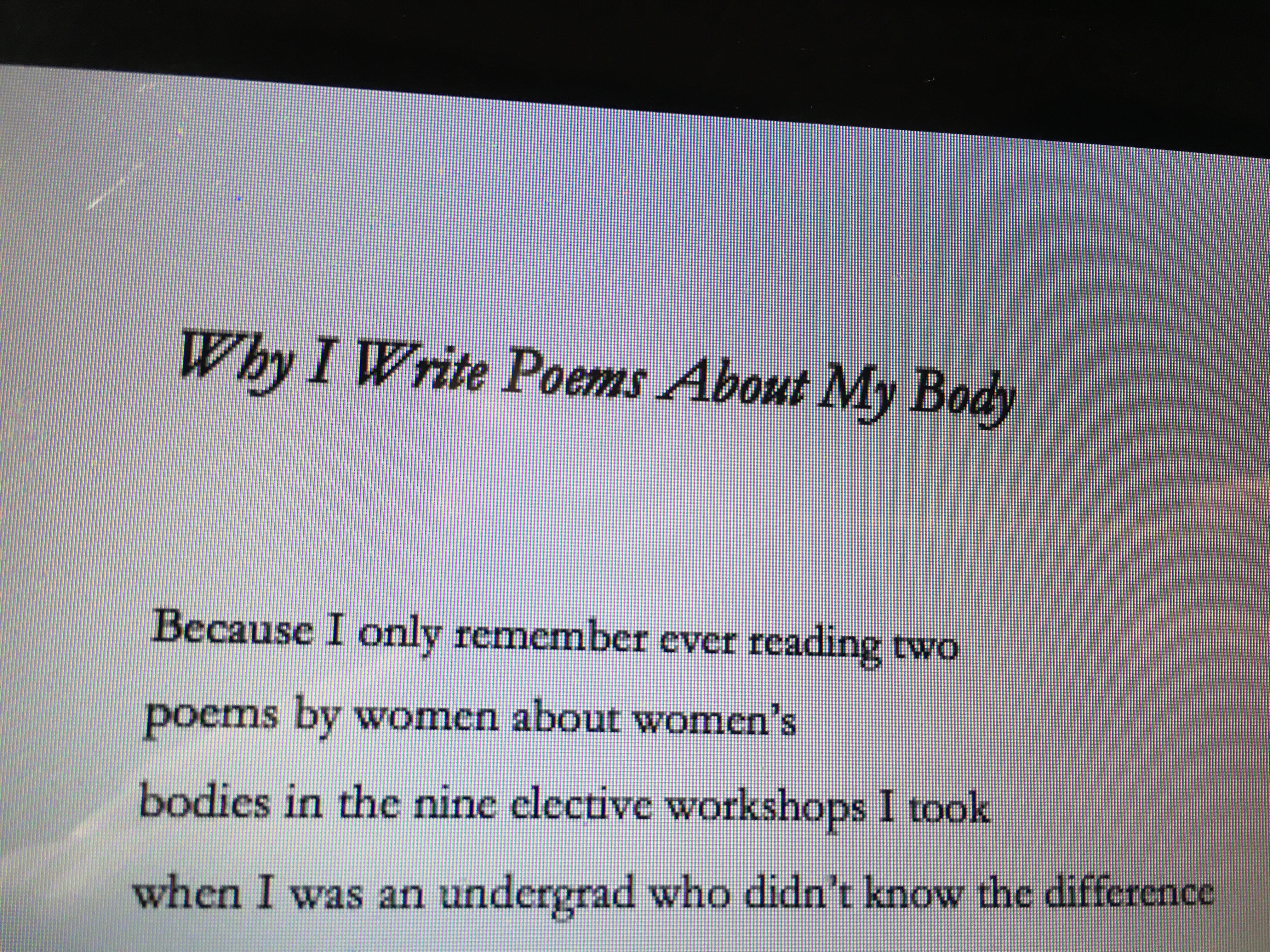
 Emilia Phillips