Setting and Voice

Victoria Embankment, London (circa 1930)

Class: Introduction to Creative Writing (The College of William & Mary)
Genre: Fiction and Nonfiction
Purpose: To examine how setting is influenced by voice
Readings: Chapters 3 (“Voice”), with “Guns for Teachers” by Warren J. Bowe and “What I Learned” by David Sedaris, and Chapter 5 (“Setting”), with “At the Dam” by Joan Didion, in Janet Burroway’s Imaginative Writing

Read the following two passages—the first from the second page of a novel, the second from the third and fourth paragraphs of an essay—by the same author about a woman going out to run an errand. Consider the author’s use of voice and setting. How does the voice change between the novel and the essay? What might point of view have to do with voice? What impression do you get of the characters from these excerpts? How much do we know about the setting? Why does the author describe the setting early on in the work?

For having lived in Westminster—how many years now? over twenty, —one feels even in the midst of the traffic, or waking at night, Clarissa was positive, a particular hush, or solemnity; an indescribably pause; a suspense (but that might be her heart, affected, they said, by influenza) before Big Ben strikes. There! Out it boomed. First a warning, musical; then the hour, irrevocable. The leaden circles dissolved in the air. Such fools we are, she thought, crossing Victoria Street. For Heaven only knows why one loves it so, how one sees it so, making it up, building it round one, tumbling it, creating it every moment afresh; but the veriest frumps, the most dejected of miseries sitting on doorsteps (drink their downfall) do the same; can’t be dealt with, she felt positive, by Acts of Parliament for that very reasons: they love life. In people’s eyes, in the swing, tramp, and trudge; in the bellow and the uproar; the carriages, motor cars, omnibuses, vans, sandwich men shuffling and swinging; brass bands; barrel organs; in the triumph and the jingle and the strange high singing of some aeroplane overhead was what she loved; life; London; this moment of June.*

~

How beautiful a street is in winter! It is at once revealed and obscured. Here vaguely one can trace symmetrical straight avenues of doors and windows; here under the lamps are floating islands of pale light through which pass quickly bright men and women, who, for all their poverty and shabbiness, wear a certain look of unreality, an air of triumph, as if they had given life the slip, so that life, deceived of her prey, blunders on without them. But, after all, we are only gliding smoothly on the surface. The eye is not a miner, not a diver, not a seeker after buried treasure. It floats us smoothly down a stream; resting, pausing, the brain sleeps perhaps as it looks.

How beautiful a London street is then, with its islands of light, and its long groves of darkness, and on one side of it perhaps some tree-sprinkled, grass-grown space where night is folding herself to sleep naturally and, as one passes the iron railing, one hears those little cracklings and stirrings of leaf and twig which seem to suppose the silence of fields all round them, an owl hooting, and far away the rattle of a train in the valley. But this is London, we are reminded; high among the bare trees are hung oblong frames of reddish yellow light — windows; there are points of brilliance burning steadily like low stars — lamps; this empty ground, which holds the country in it and its peace, is only a London square, set about by offices and houses where at this hour fierce lights burn over maps, over documents, over desks where clerks sit turning with wetted forefinger the files of endless correspondences; or more suffusedly the firelight wavers and the lamplight falls upon the privacy of some drawing-room, its easy chairs, its papers, its china, its inlaid table, and the figure of a woman, accurately measuring out the precise number of spoons of tea which —— She looks at the door as if she heard a ring downstairs and somebody asking, is she in?*

*The first excerpt is from Virginia Woolf’s 1925 novel Mrs. Dalloway. The second excerpt is from Virginia Woolf’s 1930 essay “Street Haunting: A London Adventure.” I didn’t, however, reveal this to my students immediately. As an aside, I asked them if they recognized the author before revealing the source.

Generative Poetry Workshop Proposal and Call For Help

I really want to teach a generative, one-week intensive creative writing workshop about composition practices. I’ve even written a course description/proposal, with a (rough, working) title:

Composition: What Poems Are Made Of, How Poems Are Made. A generative workshop in which students will draft their own poems using various methods. From composing aloud to writing by hand, typing on a typewriter to typing on a computer, scribbling on butcher paper to limiting oneself to a postcard, we’ll consider how each practice produces different effects on the page. Does composing aloud make the poem more musical? Does a word processor give us greater mobility across the page? For guidance, we’ll start by reading process narratives and poems by published poets, and consider how writing practices and technologies have altered poetry’s content and form.

I think the course would be really wonderful for discovering how our writing processes appeal to different parts of the brain. Students can take these exercises back to their normal writing practice, where they can try out different forms, effects, and content. Who knows, it might be an antidote to “writer’s block.” It will also provide me with an opportunity to engage in this approach of teaching poetry and provide me with insight into using drafting mediums as a pedagogical tool.

Does anyone know of any organizations looking for proposals for short-term intensives? Where would you pitch the idea? I’m thinking it might work best in a non-academic environment.

“Nobody Knows Your Name” Exercise

Kabuki Marquee (1822) by Utagawa Toyokuni I (Japan, 1769-1825)

Class: Introduction to Creative Writing (The College of William & Mary)
Genre: Nonfiction
Purpose: To explore the self as a character and subject
Readings: Chapters 8 (“Creative Nonfiction”) in Janet Burroway’s Imaginative Writing and “Nobody Knows Your Name” of Eula Biss’s Notes from No Man’s Land

Do you know the story of your name? Its meaning and its history? Do you know why your parents named you what they named you? Are there other famous people with your name? Is your name particularly popular or obscure? What does your last name say about your ancestry, if anything? What are misconceptions about your name? Is your name easily mispronounced or misspelled; if so, give us a narrative about someone getting your name wrong. Are their misconceptions about you based on your name? How would address those who make judgments on a person based on their name? If you don’t know what your name means, speculate and/or invent your own personal meaning for your name based on your experiences, the sounds in your name, etc.. Do you define your name or does your name define you? Write for 10 minutes.

“Encounter” Exercise

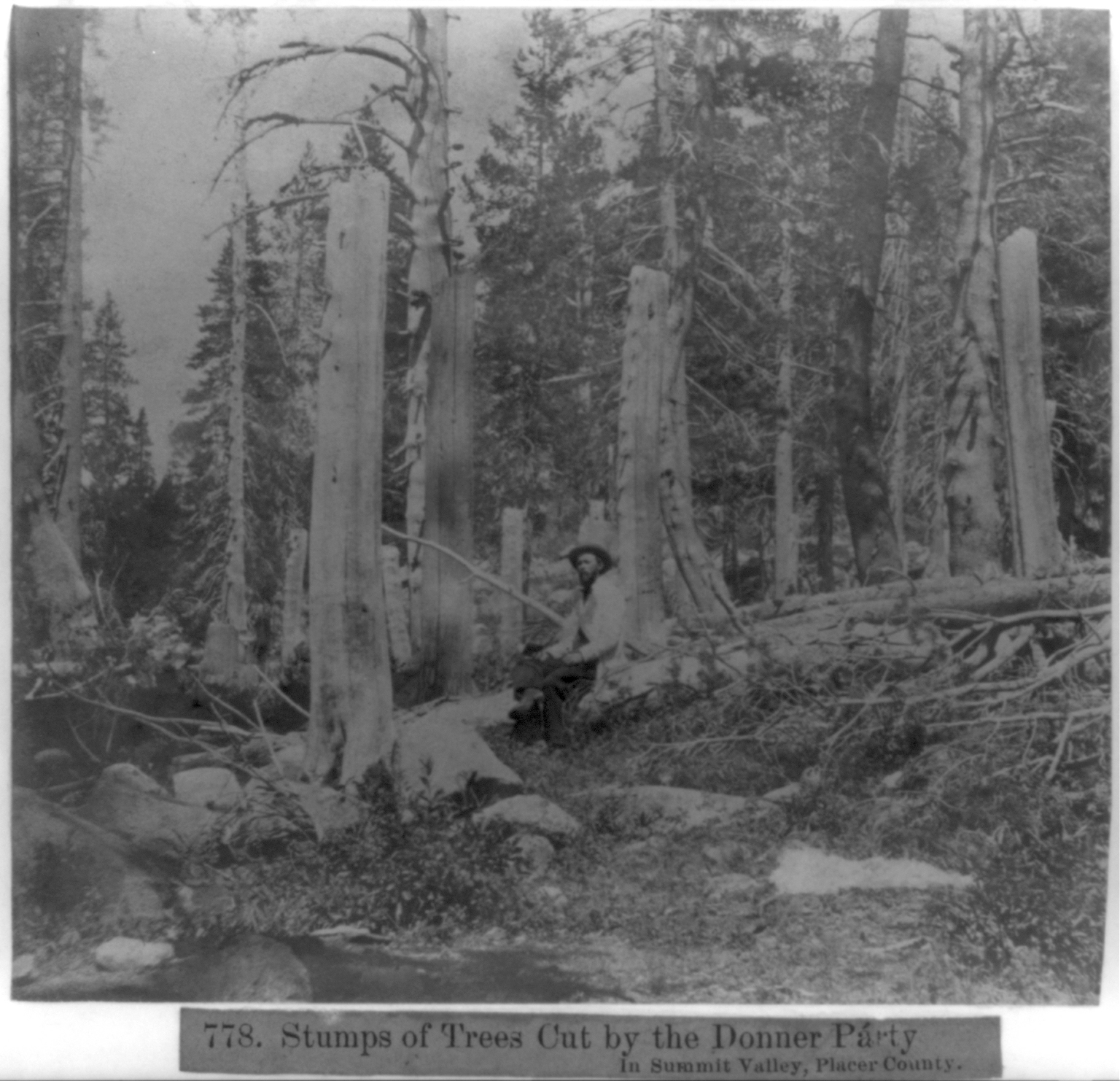
"Stumps of trees cut by the Donner Party in Summit Valley, Placer County" Grayscaled albumen print, half stereograph. (1866) via the Library of Congress
“Stumps of trees cut by the Donner Party in Summit Valley, Placer County” Grayscaled albumen print, half stereograph. (1866) via the Library of Congress

Class: Introduction to Creative Writing (The College of William & Mary)
Genre: Fiction
Purpose: To explore Burroway’s concept of “Character as Image”; examine potential of non-verbal communication; and situate the reader to receive information along with a character
Readings: Chapters 4 (“Character”) and Gabriel García Márquez’s “The Handsomest Drowned Man in the World” in Janet Burroway’s Imaginative Writing

Two characters come upon one another in the middle of a forest. Something bad—but not melodramatic*—has happened to one character and that character needs help. When the first character tries to tell the second what’s wrong, it’s revealed that the two characters don’t speak the same language. (This could include sign language.)

Write a scene from the point of view of the second character (first person “I”) while the first character tries to communicate the problem using only gestures, drawing, or other non-verbal communication. Additionally:

  • the second character cannot know what the problem is before the first character reveals it in this scene;
  • the second character should notice details throughout the interaction that reveal more about the first character (i.e. clothing, appearance, possessions, etc.)
  • the second character may or may not—or even cannot—help.

*Challenge yourself to come up with a problem that doesn’t involve far-fetched plot lines, flat characters, and easy conclusions. This means it would be best to avoid killers, aliens, and monsters. Think about more ordinary but equally tension-filled situations like a farmer whose lost a bull, a teenager who has a flat tire but doesn’t know how to change it, a hunter who accidentally shot his buddy in the foot, etcetera.

“Joe had some water”: Intro to Creative Writing Discussion about Image, Specificity, Significance, and Precision

After talking about Janet Burroway’s Image chapter in Imaginative Writing, my class took our discussion to the white board to consider problems with translating experience and ideas in language, the fundamentals of significant detail, and the precision of language.

I asked them to consider all of the possible meanings for each of these sentences:

“Joe had some water.”
—He drank some water; he has water to drink; he had water for watering his plants, etc.

“Joe had a glass of water.”
—He drank the glass of water; he had a glass of water to drink, etc.

“Joe had a glass of water on the table.”
—He had water to drink on the table and he hadn’t finished drinking it.

We explored the slippery nature of the word “had” in all of these cases, and then we thought about how context could change the sentences. We considered the difference between “a glass of water” versus a “water glass,” how the second doesn’t necessarily mean that the glass contains water, rather it could designated as a glass for water. Additionally, having the read come to “glass” before “water” would help form the image for the reader as it provides the container before what’s contained inside it.

IMG_3326.JPG

“Backwards Story a Telling” Exercise

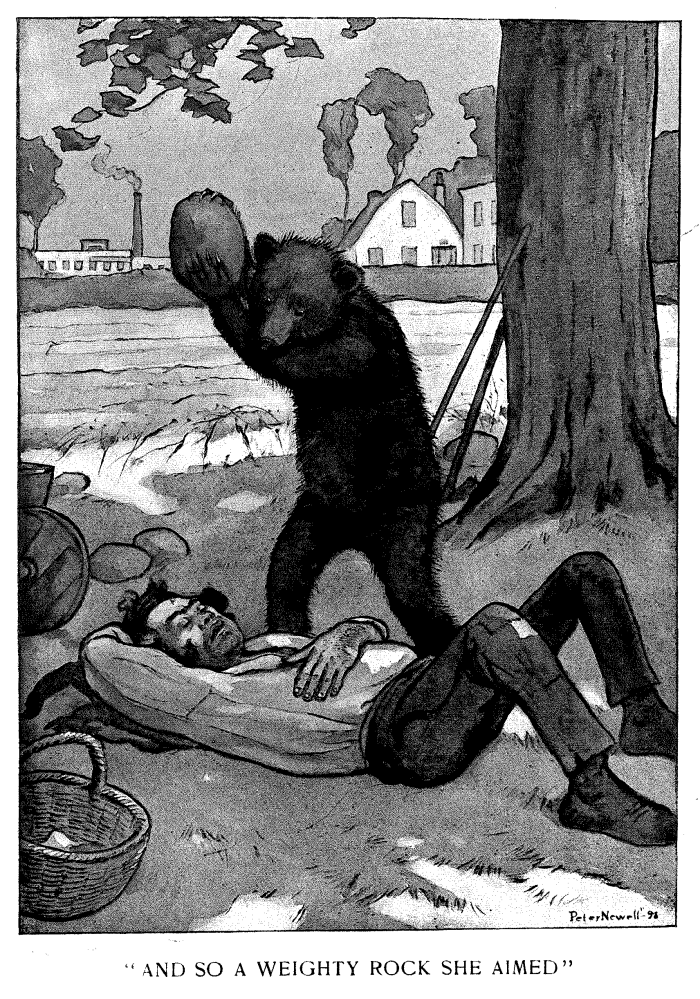
Illustration from Fables for the Frivolous by Guy Wetmore Carryl, with illustrations by Peter Newell (1898)

Class: Introduction to Creative Writing (The College of William & Mary)
Genre: Fiction
Purpose: To open up discussion about plot structure and significant details
Readings: Chapters 9 (“Fiction”) and 6 (“Story”) in Janet Burroway’s Imaginative Writing

  1. Watch a viral video without taking notes. (“Texting Guy Almost Runs Into Bear”: http://youtu.be/WYsAkjfXxzU)
  2. Write a summary of what happens in the video. (2 min.)
  3. Now write a scene from the point of view of the bear or the man. Try to tap into their thoughts and moment-by-moment perceptions. Include as many details as you can in 5 minutes. Here’s the hitch: you must tell the story in reverse chronological order! (Tell the story backwards!)
  4. Look at the inverted check mark diagram of pg. 173 in Burroway. Discuss how the check mark works for a chronological story compared to the story told in reverse. Where does the conflict fall in your scene? The crisis (climax)? Is there resolution? Were there any details you thought of telling the story backwards that you might not have thought of telling the story chronologically?

“One Story, Three Genres” Exercise

Class: Introduction to Creative Writing (The College of William & Mary)
Genre: Fiction, Nonfiction, and Poetry
Purpose: To consider how writers of three genres go about approaching similar subject matter; to introduce distinctions between the genres; and to introduce key drafting and revision considerations based on reading from Janet Burroway’s Imaginative Writing
Readings: Chapters 1 (“Invitation to the Writer”) and 7 (“Development and Revision”) in Janet Burroway’s Imaginative Writing

The_three_bears_pg_14

  1. Pick a favorite nursery rhyme, myth, or religious tale that you know by heart. Write a brief summary of the story in 2 to 5 sentences.
  2. If you were writing this narrative as a short story, how would you change it? What elements would you include? How would the style change?
  3. If you were writing this narrative as a poem, how would you change it? What would be your first steps to writing the poem? What would you leave out? What would you add in?
  4. If you were using this narrative as a basis for nonfiction, how would you frame it? How can you approach this subject matter in that way?
  5. Free write for ten minutes and begin to convert your summary into either a short story, a poem, or personal essay.

Hybrid Assignment in Introductory Creative Writing Class

For my intro to creative writing class at William & Mary this semester, I’m asking students to write one hybrid work as their final workshop piece. Often I feel like these introductory classes set up limits for students, but I wonder if allowing them to see genre as something that’s a little more fluid will encourage continued reading across the genres, an understanding that writing techniques can be used across genres, and creativity with the execution of their ideas. They will be reading a few hybrid texts at the end of the semester, too. The hybrid assignment will also give us a chance to review what we’ve gone over about the three genres by forcing us to consider their respective challenges. I think it will also give students the opportunity to tackle issues they faced across multiple assignments. Say they struggled with point of view in their poetry and concrete details in their nonfiction, but the poems presented strong images and their nonfiction offered an unwavering first-person. Perhaps they’ll be able to double up on their strengths through a hybrid work.

Regardless of the success of their pieces, I hope that we can have a great discussion that will prepare them for debates about form and theory in upper-level, genre-specific courses. Additionally, I don’t want to have a situation where I say, “You’ll discuss these forms if you choose to continue taking creative writing courses.” I want to be able to answer these inevitable questions thoroughly, not offhandedly in a minute or so in the middle of a workshop. Besides, you never know which discussion might excite a student about writing. Maybe those slippery hybrid genres are what really interest some students and they might not know it until you offer it to them!

Staggering Assignments

Distillation by Alembic, 1910. (Published before 1923 and public domain in the US.)

In my poetry class, I decided to stagger revision assignments throughout the semester instead of assigning a final portfolio, because I wanted:

  1. to avoid end-of-the-semester-grading fatigue, in order to ensure that I was always fresh and never rushed in grading;
  2. to alleviate students’ end-of-the-semester stress, so that they would be able to concentrate on revising individual poems rather than meeting basic requirements of a portfolio (better— instead of more—work at a time);
  3. to give students a better, ongoing sense of how they are progressing in the course;
  4. and to situate revision as an integral and ongoing part of the writing process that goes hand-in-hand with writing new poems and reading.

Structuring the course in this way, I felt like I was able to give more feedback, and my students’ revisions improved. In previous courses, a revision unit at the end of the semester suggested that revision was an afterthought to the writing process. By having students revise throughout the semester, workshop directly correlated to students’ next steps and, in their self-assessments, they often referred to feedback they received from their peers. Workshop, therefore, was explicitly linked to revision; it wasn’t the end but the means of their creative work—not a junkyard, but an alchemical machine.